Target will stop selling cereals with certified artificial colors by May
Published in Business News
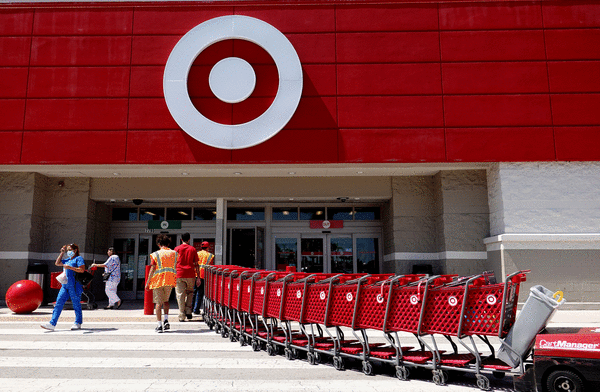
Target will stop selling cereals containing certified synthetic colors by the end of May, a move that reflects growing consumer demand for cleaner ingredients and broader industry trends away from artificial additives.
The Minneapolis-based retailer said Friday that 85% of the cereals it sells are already free of synthetic dyes. The full shift builds on the company’s standards for its Good & Gather products, which are formulated without artificial flavors, sweeteners, high-fructose corn syrup or synthetic dyes.
“We know consumers are increasingly prioritizing healthier lifestyles, and we’re moving quickly to evolve our offerings to meet their needs,” said Chief Merchandising Officer Cara Sylvester in a statement.
Target’s move comes amid rising public scrutiny of synthetic food dyes and the U.S. Food and Drug Administration’s (FDA) ongoing review of several color additives. It also comes as Walmart has gained grocery market share, including among higher-income shoppers.
“We’re going to get rid of the dyes and then one by one we’re going to get rid of every” additive in food, Secretary of Health and Human Services Robert F. Kennedy Jr. said during an April news conference.
The move aligns with the Make America Healthy Again movement, which has drawn controversy for positions including its campaign against childhood vaccines. Proponents argue that ingredients such as artificial dyes and high-fructose corn syrup build up over time and contribute to poorer health.
The Consumer Brands Association, which represents the interests of large food companies, has said artificial colors are safe. But it made a commitment to encourage companies to stop making food and beverage products with artificial colors by the end of 2027.
Certified synthetic colors are a specific category of artificial food dyes that are man-made and batch-certified by the FDA, including Red No. 40, Yellow No. 5 and Blue No. 1.
Major food companies, including Golden Valley-based General Mills, Kraft Heinz and Nestlé, also have pledged to reduce or eliminate petroleum-based dyes from products in coming years.
In early February, the FDA said it will allow companies to claim products contain no artificial colors if they do not contain petroleum-based colors, which are dyes derived from the fossil fuel petroleum.
General Mills already has removed the dyes from 85% of its U.S. retail portfolio, said spokesperson Jamie Bastian in a statement. The company remains “committed to removing certified colors from all U.S. cereals by this summer.”
Cereal brands such as Cheerios, Honey Nut Cheerios, and Cascadian Farm are already made without these colors, Bastian continued.
“We are focused on continuing to offer great tasting, affordable food that meets consumer preferences and needs – all made with the highest standards for families to enjoy,” Bastian said.
General Mills first tried eliminating food dyes from some cereals in 2015 but eventually brought the original Trix ingredients back by popular demand two years later.
The entire General Mills portfolio will be free of artificial colors by the end of 2027, the company has said.
Walmart also has said it plans to remove artificial food dyes and 30 other ingredients, including some preservatives, artificial sweeteners and fat substitutes, from its store brands sold in the U.S. by January 2027.
Target said it worked with national brands and its own private-label partners to reformulate products where needed, aiming to keep the taste, quality and prices shoppers expect.
Target declined to comment further, including on details of the negotiations it took to make the change.
Industry analysts say the cereal category is a highly visible place to take a stand on ingredients. Many brightly colored cereals have historically relied on artificial dyes, and because the category is closely associated with families and children, it carries symbolic weight in broader debates about food standards.
“This move positions Target as being more proactive on ingredient standards at a time when the U.S. is arguably playing catch-up to Europe on banning or reformulating certain synthetic ingredients,” said Amanda Lai, director of food industry practice at McMillanDoolittle.
In the near term, Lai said, the move differentiates Target, particularly as the retailer seeks to stand apart from mass competitors like Walmart and Amazon while navigating a period of performance challenges.
“Target stepping in ahead of broader federal mandates allows it to signal leadership and align with rising consumer scrutiny around additives,” she said.
However, she cautioned that ingredient changes tend to spread quickly across retail. If major manufacturers reformulate products nationally or other retailers follow through on similar pledges, removing synthetic dyes could become table stakes rather than a lasting competitive advantage.
The longer-term impact will depend on how consistently Target applies similar standards across additional categories.
Still, for consumers deeply committed to clean-label standards, the change is likely to be viewed as a step in the right direction rather than a full transformation.
Heightened attention to nutrition since the pandemic, along with trends such as increased use of GLP-1 drugs, has made consumers more deliberate about their food choices, Lai said. At the same time, “clean label” has become a premium signal that can elevate perceptions of quality, even when a product’s nutritional profile changes little.
Target, which has been working to reverse a prolonged sales slump under new CEO Michael Fiddelke, will report its quarterly and year-end results Tuesday. Fiddelke also is expected to lay out details of his strategy moving forward.
“To be clear, even a category like food and beverage plays here, and we have a fantastic opportunity to further build on the newness and differentiation our loved owned brands and national brand partners provide in food,” Fiddelke said on an August earnings call.
(Victor Stefanescu of the Minnesota Star Tribune contributed to this story.)
©2026 The Minnesota Star Tribune. Visit at startribune.com. Distributed by Tribune Content Agency, LLC.








Comments