Terry Savage: Savings bonds update
Published in Business News
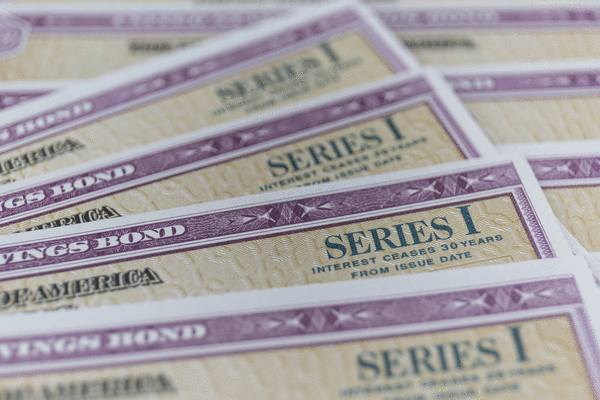
The new interest rate on Series I Savings Bonds has jumped to 5.51% annual interest rate for the next six months — a combination of a fixed base rate of 1.40%, and a current inflation adjustment of 4.08%. That headline number will be paid on all new purchases, and the inflation adjustment will be added to whatever fixed base rate exists on your earlier bond purchases.
That combined 5.51% is up from the 4.26% yield on purchase made through Oct. 31.
Now, aren’t you glad you didn’t dump those Series I Savings Bonds you purchased in May 2022 when the six-month inflation adjustment plus base rate reached an annualized 9.62%? That headline number brought in a rush of I-bond purchases made online through TreasuryDirect.gov. Despite warnings that the six-month inflation adjustment (which occurs on November 1 and May 1 every year) would likely decline in coming years, the I-bond rush was on!
Then the six-month inflation adjustments dropped as inflation came under control. Many savers redeemed their bonds early, paying a penalty of the loss of three months’ interest! People who purchased when rates were highest were understandably disappointed in subsequent years.
How inflation adjustments work
Back in May 2022, the fixed base rate for the bonds was actually zero! But the I-bond yielded 9.62% for the first six months — earning $481.00 on a $10,000 bond.
Then inflation started coming down, and the next six-month period, starting in November 2022 produced a combined rate of only 3.24% — paying only $162 for that six-month period. The combined annual rate of return worked out to 6.43%, still an attractive investment.
In succeeding years, inflation dropped — creating an inflation adjustment of only 1.69% for the six-month period starting the following May.
The current 4.08% inflation adjustment is the highest since May 2022. But projecting into the future requires inflation to remain at current levels — despite the Fed’s insistence on bringing it down.
The importance of the fixed base rate
The fixed base rate, set at the time of purchase, is an important component of this investment. It was zero from 2020 (during the pandemic) through May 2022. But in November 2022, the base rate moved to 0.4%, and subsequently to 0.9%, and then upward to the current 1.40% fixed base rate on bonds currently being sold.
That higher fixed base rate for the life of the bond will provide a “cushion” of protection if inflation drops in the future, sending the six-month adjustment lower.
Should you buy savings bonds?
The answer to that question depends on your time horizon and your risk tolerance. For sure, you should plan to hold the Savings Bonds for five full years to avoid the penalty. And you MUST hold them for at least one year! They are a safe investment, and they protect you from inflation — but they are not really liquid. And you should be willing to accept the ups and downs of the six-month inflation adjustment.
You could buy six-month Treasury bills if you want more liquidity, since you can get the cash when they mature, instead of rolling them over at the new rate. Or you could buy a “Treasury-only” money fund at a slightly lower rate, and have access to your cash at any time.
There’s another advantage to savings bonds: You don’t pay taxes on the interest you earn until you cash them in. And they are not subject to state income tax.
How to buy savings bonds
The only place to buy savings bonds now is through the online government website — www.TreasuryDirect.gov — where it’s easy to set up an account and make your purchase with money taken directly from your bank account. You will need your bank routing and account numbers. You’ll see your purchase in your account the next business day.
You can open an account in your name, using your Social Security number. Spouses must each open a separate account, even if the money is coming out of a joint bank account. You can open an account in the name of your revocable living trust. And you can still buy “gift bonds” (see below). But you cannot purchase savings bonds in an IRA.
There is a $10,000 per person per year limit for purchases of savings bonds. Minimum purchase is $25.
The purchase limitation is based on the Social Security number. So, each spouse, for example, could purchase $10,000 of bonds. If you have an individual TreasuryDirect account and also a revocable living trust that uses your Social Security number, you should apply for a separate “EIN” so the trust can buy an additional $10,000 of I-bonds.
Bonds can also be registered for two people, using the designation “with” or “POD” (payable on death). Only the primary name and Social Security number counts toward the $10,000 annual limit.
You can still gift bonds using the Social Security number of the recipient if they have a TreasuryDirect account. But you can also gift using their Social Security number but keeping the bonds in your own account, to be distributed at some time in the future at your choice or after your death.
Special Note: Ownership of bonds at death depends on how you have titled the bonds. If there is a POD or “with” designation, the other named owner can keep the bonds and keep earning interest on them. Or they will be distributed by a trustee or will executor. But there is no “step-up” in cost basis for the bonds at death, so the estate or recipient is responsible for taxes on all accrued interest.
How interest is paid on savings bonds
You won’t see interest posted in your TreasuryDirect account until the fifth month after purchase. That reflects the potential three months’ loss of interest, as well as the fact that interest isn’t paid until the month after it accrues. But you do get six full months of interest at the promised rate for the ensuing six months, even if you purchased midway through the interest rate period. Then the rate will automatically adjust to the then-current rate for the next full six months.
If you’re looking for safety, plus inflation protection — and if you are willing to tie up your money for five years — Series I Savings Bonds are the answer. Just don’t be surprised at the rate fluctuations. They’re designed to protect you from inflation. That’s the Savage Truth.
©2026 Terry Savage. Distributed by Tribune Content Agency, LLC.








Comments