Pakistan, Saudi Arabia discuss joint steps to counter Iran attacks
Published in News & Features
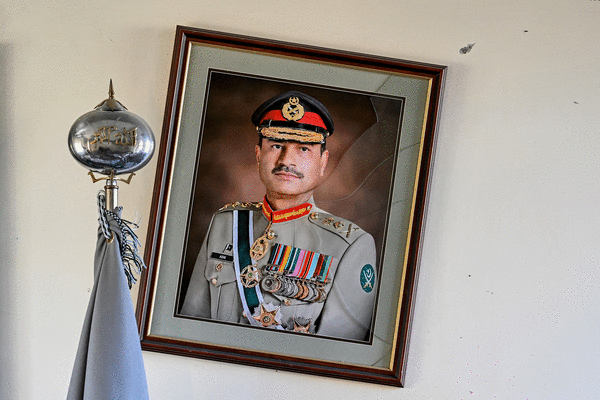
Pakistan said it’s discussed with Saudi Arabia joint measures they could take to halt Iranian drone and missile strikes on the kingdom, a first test of the mutual defense pact between the two countries.
Pakistan’s military said Saturday its powerful army chief Asim Munir met Khalid bin Salman in Saudi Arabia to discuss the deteriorating security in the region. Pakistan’s Foreign Minister Ishaq Dar also spoke with his Iranian counterpart Abbas Araghchi on Saturday, according to the foreign office.
Munir and Saudi’s defense minister discussed “the gravity of the security situation accruing from Iranian drone and missile attacks on the Kingdom and joint measures needed to halt them within the framework of Strategic Mutual Defence Agreement,” the military said in a statement.
Saudi Arabia and nuclear-armed Pakistan signed the defense pact in September last year, elevating their long-standing security partnership, and stating that “any aggression against either country shall be considered an aggression against both.” Dar told reporters last week that Pakistan had been in touch with Iran to inform it of the defense treaty with Saudi Arabia.
Tehran has maintained missile strikes on Gulf states in the now week-long war with the U.S. and Israel, a seismic conflict that’s reverberated worldwide. Saudi Arabia said Saturday that it intercepted drones that were heading toward a major oil field, the latest energy asset to be targeted in a conflict that’s triggered a surge in crude and gas prices.
Pakistan’s military said Saturday that Munir and Khalid agreed that “unprovoked aggression undermines regional stability and foreclose options for a peaceful settlement of disputes.” Both sides hoped that Iran would “manifest prudence and sagacity to avoid any miscalculation and strengthen the hands of friendly countries seeking peaceful settlement of the crisis,” it said.
The assurances from Pakistan suggests it could be dragged into the Iran conflict, raising the stakes for the country. Pakistan’s Shiite population — the largest in the world after Iran and Iraq — share strong religious and ideological ties with Iran. Protests erupted outside several U.S. consulates in the aftermath of the killing of Iran’s Supreme Leader Ayatollah Ali Khamenei, leaving at least two dozen people dead.
Pakistan is also engulfed in its own fighting with neighboring Afghanistan, with cross-border attacks that have intensified in recent weeks. A spokesman for Prime Minister Shehbaz Sharif on Friday ruled out peace talks with Afghanistan until the Taliban government there stops supporting militant groups that Islamabad accuses of launching attacks on its territory.
_____
©2026 Bloomberg L.P. Visit bloomberg.com. Distributed by Tribune Content Agency, LLC.






Comments