Oil set for weekly rise as fresh fighting threatens Hormuz flows
Published in News & Features
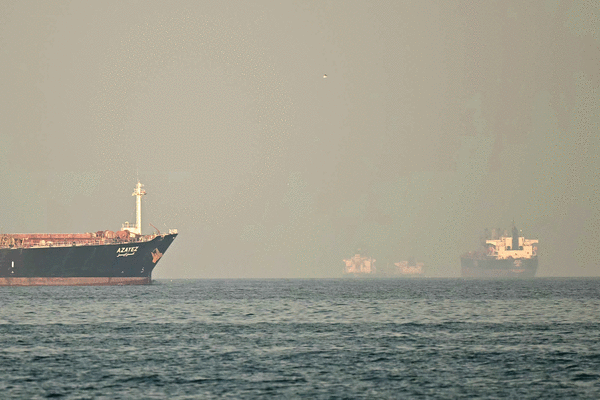
Oil was on track for a weekly surge as renewed fighting between the U.S. and Iran heightened concerns about prolonged disruptions to energy flows through the Strait of Hormuz.
Brent edged lower to around $95 a barrel on Friday, but was still up about 6% for the week, while West Texas Intermediate was under $91. A flare up in fighting has undermined efforts to increase exports from Persian Gulf countries, as a U.S. bombing campaign and Iran’s retaliatory strikes on American bases complicate the restoration of shipping through the world’s most important energy chokepoint.
The descent into hostilities has spurred Iran to target vessels transiting Hormuz, following a period of relative calm in which traffic through the strait crept higher. The prospect of another cycle of military escalation now hangs over the region, after Iran fired salvos at Jordan, Kuwait and Bahrain, and Israel warned it would strike civilian infrastructure if attacked by Iran.
“An elevated georisk premium remains as long U.S. and Iran continues to attack each other, reducing the chance of a much needed full scale reopening,” said Ole Sloth Hansen, head of commodity strategy at Saxo Bank. He attributed Friday’s price swings to profit-taking as traders took stock of the tenuous conflict.
Brent crude is up almost 60% this year, with refined products such as diesel seeing even steeper gains under the simultaneous pressure of war in the Middle East and Russia’s invasion of Ukraine. U.S. retail prices of the industrial fuel rose to a record this week, while stockpiles in Europe are well below seasonal levels.
Spot LNG prices in Asia also rallied to the highest in more than three years, with elevated costs weighing on demand and government coffers in some parts of the region.
Despite the renewed hostilities, U.S. officials have suggested that regional flows remain robust. Traders have shrugged off most of those estimates, which far exceed shipment rates reported by firms that monitor seaborne oil flows. Still, crude is exiting Hormuz aboard hard-to-track vessels, many of which have switched off their transponders to avoid detection. Those flows have kept crude prices from rallying even further.
Saudi Arabia also kept the price of its flagship crude to Asia unchanged for next month, going against market expectations for an increase. Exports from the kingdom have sunk to the lowest in years as Houthi rebels threaten its Red Sea ports, making shipments more dangerous from both of its coasts.
Meanwhile, South Korea has begun preparations to potentially send a naval support ship and troops to Hormuz, local media reports said, as President Donald Trump has cornered the U.S. ally over not doing more to support the war with Iran.
Vice President JD Vance played down the scope of the conflict on Thursday, saying he wouldn’t describe it as a war because major combat operations ended weeks ago. Republican Representative Pat Harrigan of North Carolina, who sits on the House Armed Services Committee, offered a different assessment, saying “very clearly militarily, we are stalled.”
Oil markets are “repricing their vulnerability,” said Priyanka Sachdeva, head of market insights at Phillip Nova Pte Ltd. in Singapore. “The risk premium can only be compressed for so long when the underlying security issue remains unresolved.”
©2026 Bloomberg L.P. Visit bloomberg.com. Distributed by Tribune Content Agency, LLC.






Comments