Oil steadies in thin trade with Iran, Ukraine tensions in focus
Published in News & Features
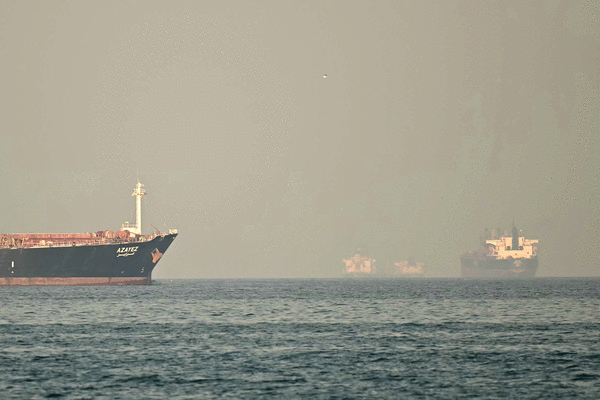
Oil swung in thin holiday trading as renewed fighting between the U.S. and Iran heightened supply concerns, while rare signs of progress toward ending the Russia-Ukraine war chipped away at the geopolitical risk premium.
West Texas Intermediate edged up 0.2% to settle near $91.50 a barrel on Friday after a relative lull in hostilities in the Middle East bookended days of relentless tit-for-tat strikes. Trading volumes were muted ahead of the Labor Day holiday weekend, with investors reluctant to take big positions given uncertainty in the U.S.-Iran conflict that’s disrupted energy shipping through the Strait of Hormuz.
“The quieter overnight session on the military front is taking some of the momentum out of the upside,” said Rebecca Babin, senior energy trader at CIBC Private Wealth Group. “Add in some profit-taking after a strong rally this week and thin liquidity, and it’s really a combination of factors” weighing on crude.
Further subduing prices, Ukrainian President Volodymyr Zelenskyy said U.S. President Donald Trump’s envoys Steve Witkoff and Jared Kushner will visit Moscow and then Ukraine for talks aimed at ending the war. Ukrainian drone strikes on Russian energy infrastructure have loomed large over energy markets in recent times.
Still, the commodity was 9.7% higher this week as a U.S. bombing campaign and Iran’s retaliatory strikes on American bases complicate the restoration of shipping through the world’s most important energy chokepoint.
The descent into fighting has spurred Iran to target vessels transiting Hormuz, following a period of relative calm in which traffic through the strait crept higher. The prospect of another cycle of military escalation now hangs over the region, after Iran fired salvos at Jordan, Kuwait and Bahrain, and Israel warned it would strike civilian infrastructure if attacked by Tehran.
Refined products, such as diesel, have been posting even steeper gains under the simultaneous pressure of war in the Middle East and Russia’s invasion of Ukraine. U.S. retail prices of the industrial fuel rose to a record this week, while stockpiles in Europe are well below seasonal levels. The rise in retail fuel prices portends more pain at the pump for Americans hitting the road this Labor Day weekend.
Spot LNG prices in Asia also rallied to the highest in more than three years, with elevated costs weighing on demand and government coffers in some parts of the region.
Despite the renewed hostilities, U.S. officials have suggested that regional flows remain robust. Traders have shrugged off most of those estimates, which far exceed shipment rates reported by firms that monitor seaborne oil flows. Still, crude is exiting Hormuz aboard hard-to-track vessels, many of which have switched off their transponders to avoid detection. Those flows have kept crude prices from rallying even further.
Meanwhile, South Korea has begun preparations to potentially send a naval support ship and troops to Hormuz, local media reports said, as Trump has cornered the U.S. ally over not doing more to support the war with Iran.
Vice President JD Vance played down the scope of the conflict on Thursday, saying he wouldn’t describe it as a war because major combat operations ended weeks ago. Republican Representative Pat Harrigan of North Carolina, who sits on the House Armed Services Committee, offered a different assessment, saying “very clearly militarily, we are stalled.”
Oil markets are “repricing their vulnerability,” said Priyanka Sachdeva, head of market insights at Phillip Nova Pte Ltd. in Singapore. “The risk premium can only be compressed for so long when the underlying security issue remains unresolved.”
_____
With assistance from Kanoko Matsuyama.
_____
©2026 Bloomberg L.P. Visit bloomberg.com. Distributed by Tribune Content Agency, LLC.






Comments