Two NC adults die after contracting West Nile virus, state health department says
Published in News & Features
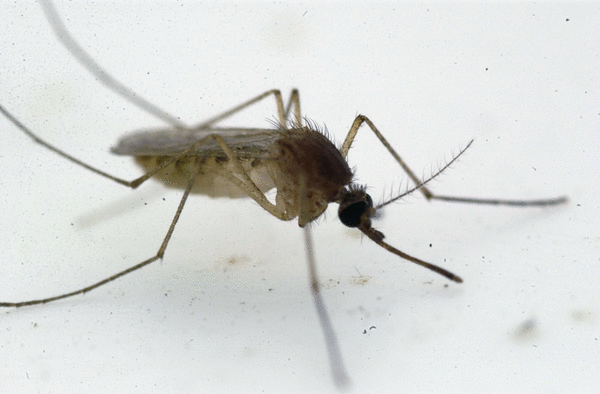
Two adults from central North Carolina have died after contracting West Nile virus, according to the state Department of Health and Human Services.
The department announced the deaths on social media Friday. The deaths come after the department reported the first case of the disease in a Gaston County resident earlier this year. A West Nile virus-positive blood donor was also recently identified in Mecklenburg County through routine screening.
The state did not release information about where the deaths occurred in central North Carolina but warned residents to take preventative measures.
What is West Nile virus?
The mosquito-borne illness is carried by wild birds and transmitted to people through the bite of an infected mosquito. Mosquitoes pick up the virus by biting infected birds, where the virus multiplies.
The disease does not spread from person to person.
While most infected individuals experience no symptoms, about one in five will develop a fever, headache, body aches and joint pain.
About one in 150 people will develop a serious neurological illness with severe symptoms including a high fever, neck stiffness, disorientation, seizures and paralysis.
West Nile virus lacks a vaccine or specific medications available to cure the disease once a person is infected. Anyone who is ill or suspects they may be infected is urged to contact their health care provider, the department said.
How to take protective measures
The mosquitoes that most commonly transmit the virus are found statewide and are highly active between dusk and dawn, the department said.
To protect yourself, health experts recommend:
—Use insect repellent: Apply an EPA-registered mosquito repellent, such as DEET. Reapply regularly, especially after sunset.
—Dress protectively: Wear long sleeves and long pants
—Secure your home: Limit outdoor activity between dusk and dawn. Use window and door screens, ensure they fit tightly and are free of tears.
—Eliminate standing water: Dump containers that collect water after every rainfall, including flowerpot saucers, toys, buckets, and tires. Change the water in birdbaths and pet bowls.
—Maintain home drainage: Keep gutters clean and in good repair. Replace corrugated downsprout extensions with smooth ones to stop larvae growth, and ensure rain barrels have tight-fitting screens or lids.
—Treat persistent water: Use EPA-approved larvicides on standing water in low areas around the home that cannot be drained.
_____
©2026 Raleigh News & Observer. Visit newsobserver.com. Distributed by Tribune Content Agency, LLC.






Comments