US measles cases top 5,000 for the first time since the 1990s
Published in News & Features
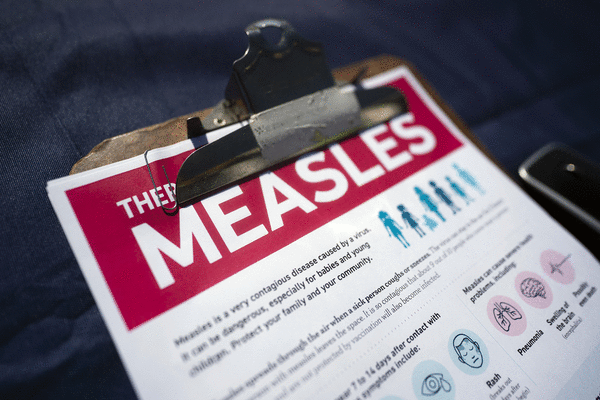
More than 5,000 people have been infected with measles in the United States this year, as the country faces the loss of its long-held elimination status later this month.
The U.S. Centers for Disease Control and Prevention confirmed 5,182 measles infections on Friday, the highest since 1991. The public health agency has recognized just four deaths nationwide this year related to the disease — a break from precedent — after Pennsylvania’s health department confirmed six measles-associated deaths and New York and Wisconsin both reported one.
The highly-infectious disease has been spreading at an increasing pace as vaccination rates have fallen, eroding the herd immunity that suppresses outbreaks and protects those who can’t be immunized. It’s grown into the largest outbreak in decades, reaching 45 states.
The U.S. has held the label of a measles-eliminated country since 2000, but continued transmission of the disease threatens the status. Next week, the Pan American Health Organization will review transmission data from the past year to determine whether the U.S. will lose its status and no longer has a grip on controlling the spread. If one viral strain has been in circulation for 12 months, the U.S. will lose the label. Utah’s outbreak has been circulating since June 2025 and has infected more than 700 people — likely pointing to the loss for the entire U.S.
This year, Pennsylvania has been the hardest-hit state, with 1,467 cases recorded since April. The first fatalities reported in the state sparked a political fight between Health and Human Services Secretary Robert F. Kennedy Jr. and Democratic Governor Josh Shapiro, as Kennedy called into question the validity of the deaths. The CDC is working with an outside group of epidemiologists to determine the definition of a measles fatality.
Since the outbreak started, Pennsylvania health officials have ramped up the provision of vaccinations — including to the undervaccinated Amish and Mennonite populations that have experienced the highest number of cases. More than 100,000 doses of the measles, mumps and rubella shot were provided in September and October by healthcare providers, according to the state’s health department.
On Nov. 2, New York confirmed its first measles-associated death in 30 years. Governor Kathy Hochul has issued a state of emergency to free up resources to respond quickly with vaccines and testing. Three days later, Wisconsin reported the death of an infant — its first measles mortality in decades.
Federal health officials have deployed $100 million in resources to states to help with vaccination and tracing efforts. Some states have requested on-the-ground assistance from the CDC, including Pennsylvania, which received one person to help with data analysis and outbreak forecasting.
Kennedy, a longtime vaccine critic who previously founded an anti-vaccine organization, has expressed doubt about the MMR shot, and has touted unproven remedies instead. Kennedy and President Donald Trump have moved to upend vaccine policy in the U.S., including an August executive order that proposed splitting up MMR immunization into three separate shots. The move would be time-consuming and costly for drugmakers Merck & Co. and GSK Plc.
No vaccine is perfect, but the MMR is considered 97% effective after two doses. Measles is highly contagious and infects up to 90% of unvaccinated people who come into contact with an infected person, according to the CDC. One to three children out of every 1,000 infected will die from the disease, the CDC says.
—With assistance from Bill Haubert.
©2026 Bloomberg L.P. Visit bloomberg.com. Distributed by Tribune Content Agency, LLC.




Comments