Record water levels caused by tides, El Niño are giving a stark preview of future sea level rise
Published in News & Features
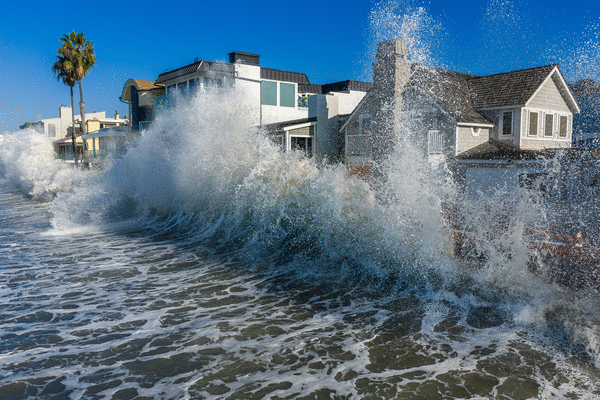
SAN DIEGO — A highly unusual combination of warm water and king tides is damaging animal habitats in Mission Bay and providing a stark preview of how the bay might look if sea levels rise as much as predicted in coming decades.
Four factors came together last month to create record water levels in Mission Bay: the king tide phenomenon that happens every fall, Kelvin waves caused by El Niño, unusually warm water and ongoing sea-level rise caused by climate change.
For humans, the record water levels wiped out most of the bay’s sandy beaches, flooded bike paths and changed where and how recreational activities like swimming and paddle boarding could take place.
For birds, the higher water submerged nesting platforms in Kendall-Frost Marsh, shifted habitats for a wide variety of species and changed where some birds choose to hunt fish.
“This is a visualization of what we’re all concerned about,” said Andrew Meyer, conservation director for the San Diego Bird Alliance and a big proponent of efforts to fight sea-level rise. “You can come see the future.”
The record water levels, which extended from the bay into the Pacific Ocean last month, prompted the bird alliance to do emergency work last Thursday to extend nesting platforms in anticipation of even more chaos.
More king tides, which happen because the sun and moon are pulling in the same direction, are being predicted for Nov. 22 through 27 and Dec. 22 through 26 by the National Oceanic and Atmospheric Administration.
Simultaneously, El Niño is expected to continue producing Kelvin waves throughout much of the late fall and winter. And ocean temperatures, which have hovered around record levels, at 73 and 74 degrees Fahrenheit — at least 10 degrees higher than normal for this time of year — are expected to remain elevated.
Kelvin waves exacerbate the risks created by the king tides.
“These slow-moving, large-scale oceanic waves bring pulses of warm water eastward toward the Pacific coast of the Americas, temporarily raising the sea level by 6 to 12 inches or more,” NOAA says on its website.
The unusually warm water makes things even worse.
“Warmer water takes up more space than cold water, a concept known as thermal expansion, causing water levels to rise higher and reach further inland,” NOAA says. “The combined effects of these factors have driven water levels to record heights, flooding roads, inundating homes and businesses and disrupting daily life.”
Water levels at Scripps Pier, the local measuring spot of record, were 2.8 feet above normal on Oct. 27 at 9:54 a.m. That broke the all-time record since scientists began tracking such things more than 100 years ago.
“These kinds of tides are becoming more and more common and higher and higher,” Meyer said.
He said the higher water levels have been particularly impactful for the endangered light-footed Ridgway’s rail. Nesting platforms the Bird Alliance maintains for this animal are now partly submerged.
“Their feet are getting wet because the water is higher than the platform can rise – we’ve never had this problem before,” Meyer said.
On Thursday, Meyer and his team of environmentalists ventured into the Kendall-Frost Marsh – 50 acres of remaining marshland in Mission Bay Park that was never transformed into recreation land – to raise the level of the nesting platforms.
Meyer said higher water levels essentially eliminate the marsh and make the area more akin to open water.
“The marsh being taken away is totally normal because it’s a tidal habitat, but El Niño and warm water and king tides takes more and more of that away,” he said. “If we’re not providing a platform that’s dry, they’ve got no place to go.”
The Bird Alliance has eight cameras and 21 nesting platforms in the marsh. They had 22 platforms as recently as last month, but one of the platforms vanished amid the chaos of the higher water levels.
Meyer said marshes like Kendall-Frost, which city officials have vowed to expand, also help fight sea-level rise by pulling carbon from the air and acting like a sponge for coastal surges.
The City Council is scheduled in mid-November to approve changes to its plan for expanded marshland in Mission Bay Park that have been requested by the state Coastal Commission.
“Humans have started living where they used to live,” Meyer said of the Ridgway’s rails. “They are an awesome indicator of the health of the wetlands we have left.”
Meyer said the water-level surge has created other notable changes.
Pelicans and double-crested cormorants were seen hunting last week in Kendall-Frost Marsh. They usually hunt for fish in the ocean or in more coastal and deeper parts of the bay.
“There are a few species of birds that will win as sea level rise creates more open water,” Meyer said.
But he cautioned that those birds can thrive in many types of habitats, while the Ridgway’s rail and lots of other species can essentially only thrive in a marsh.
“This is the rarest kind of habitat,” Meyer said.
_____
©2026 The San Diego Union-Tribune. Visit sandiegouniontribune.com. Distributed by Tribune Content Agency, LLC.






Comments