Miami man threatened to kill Rubio and Noem -- and FBI found disturbing notes
Published in News & Features
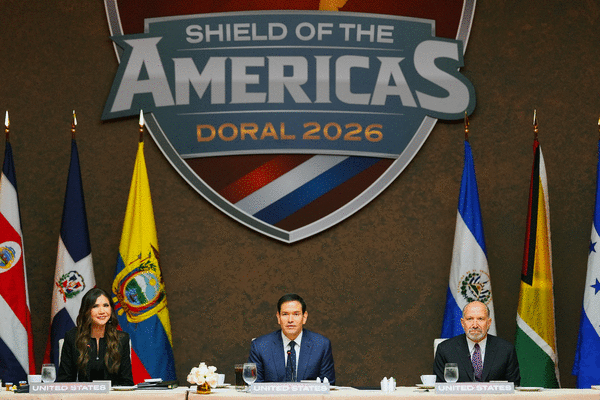
MIAMI — A Miami man who threatened to execute Secretary of State Marco Rubio and former Secretary of Homeland Security Kristi Noem in a series of social media posts was sentenced to two years in federal prison after investigators discovered disturbing writings in his home, including a note about shooting Cubans in the United States.
“Both of you will be executed at 16:30,” Jon Christopher Enriquez wrote in a May 27 post on X, after accusing the officials of seditious conspiracy and criticizing Rubio’s comments about Cuba.
Twenty-one minutes later, he directed another message at Rubio: “I guess the only way that you are going to shut your mouth is through DEATH.”
At 3:11 p.m., Enriquez, 47, posted a third threat, this time announcing an earlier execution time for both officials.
“Rubio AND Noem are to be executed at 16:00. Rubio Y Noem serán ejecutados a las 16:00,” he wrote, repeating the threat in Spanish.
The messages, posted over less than two hours, prompted an investigation by the State Department’s Diplomatic Security Service that led to Enriquez’s arrest and a search of his Miami residence.
The case also raised a question central to his sentencing: Did Enriquez intend to carry out his threats, or was he making violent statements online without taking steps to act on them?
Federal prosecutors and his defense attorney agreed that a sentencing enhancement for conduct demonstrating an intention to carry out the threats should not apply. They disagreed, however, about how credible the threats were and how severely Enriquez should be punished.
U.S. District Judge Beth Bloom sentenced Enriquez on Oct. 16 to 24 months in prison after he pleaded guilty to three counts of transmitting threats through interstate communications. She also imposed three years of supervised release.
Threats involving Cuba and government officials
The language of Enriquez’s messages appears in records filed July 31 in Miami federal court and signed by Enriquez, his attorney and a federal prosecutor. In the filing, he admitted publishing the posts with the intent to communicate true threats, knowing they would be viewed as such.
His first message, posted around 1:30 p.m., addressed Rubio and the State Department directly.
“@SecRubio @StateDept Silence yourself. Before you start thinking that America owns Cuba and start talking trash and calling Cuba a failure, the Criminal Court of the Armed Forces is going to begin the investigation of you as a failure to your nation,” Enriquez wrote.
The message continued with a reference to aircraft and a purported conviction for seditious conspiracy.
“The 2 Falcon jets were replaced by Gulfstreams. Rubio, Noem [...] You have been found guilty of 18 USC Section 2384: Seditious Conspiracy,” he wrote, before threatening their execution.
The purported conviction was part of Enriquez’s message, not an actual judicial finding. The court documents do not explain what prompted the posts or establish that he had any personal connection to either official.
What investigators found at his home
According to prosecutors, investigators quickly identified Enriquez and discovered that he lived minutes from public locations frequented by Rubio, who was expected to visit Miami-Dade County within days.
After arresting Enriquez, authorities obtained a search warrant for his residence, where agents found a computer displaying the names and images of government officials, a whiteboard mentioning “SouthCom,” a reference to the U.S. Southern Command based in Doral, and a typewritten note that prosecutors described as authorizing Americans to shoot Cubans in the United States.
The reference to Cubans stood out because Enriquez’s threats had included criticism of Rubio’s statements about Cuba. But the filings do not establish whether the note was connected to those messages or whether Enriquez intended to act on it.
His attorney, Assistant Federal Public Defender Leticia M. Olivera, challenged the government’s characterization of the note and disputed a description of the whiteboard as containing “plans” involving the Southern Command.
Prosecutors did not oppose those factual objections. They also agreed that a six-level sentencing enhancement for conduct demonstrating an intention to carry out the threats should not apply, explaining that the conduct cited in the pre-sentence report had occurred or been discovered after the threatening posts.
Nevertheless, prosecutors maintained that Enriquez’s messages constituted credible threats of violence, citing their language, Rubio’s expected presence in Miami-Dade and the findings inside his residence.
The defense countered that Enriquez had no information about the officials’ whereabouts, no personal connection to them and no demonstrated ability to attack them. Olivera also argued there was no evidence that Rubio or Noem had seen the messages or considered them believable.
A veteran with a troubled history
In seeking a sentence below the federal guidelines, Olivera portrayed Enriquez as a Navy veteran whose life had been marked by trauma, psychiatric illness and substance abuse.
According to her sentencing memorandum, Enriquez suffered a violent assault during his military service and was discharged because of his sexual orientation. She described a history of mental illness, drug addiction and suicide attempts, but said he had no history of violence or weapons use and that this would be his first felony conviction.
“Mr. Enriquez has accepted full responsibility for his offense conduct and expressed sincere remorse,” Olivera wrote.
The defense calculated an advisory sentencing range of 18 to 24 months but sought a shorter prison term, citing Enriquez’s personal circumstances, need for treatment and lack of violent history.
Olivera also pointed to U.S. Sentencing Commission data showing that defendants with comparable guideline calculations and criminal histories had received a median sentence of 12 months during the preceding five years.
Handwritten apologies
Enriquez submitted handwritten letters to Rubio, Noem and Bloom expressing remorse for his actions.
In a June 29 letter to Rubio, he apologized and described having admired the secretary of state since his early days in public office. He praised Rubio’s positions on Cuba and expressed support for his political future, a striking contrast with the threats he had published weeks earlier.
In a separate letter to Noem, Enriquez apologized and said he missed her tenure as secretary of homeland security.
His letter to Bloom offered a more personal explanation.
“I didn’t mean one word of my posts on Twitter,” Enriquez wrote, comparing his statements to the exaggerated expressions of anger people sometimes make while driving.
He insisted he would never intentionally hurt anyone and said he would rather harm himself than another person.
“Had I known that things would escalate to this, I would have never done anything,” he wrote.
Enriquez described his time in jail as painful and asked the judge for forgiveness and mercy.
©2026 Miami Herald. Visit at miamiherald.com. Distributed by Tribune Content Agency, LLC.




Comments