ULA's Vulcan suffers 'anomaly' after launch, losing 40 Amazon satellites
Published in News & Features
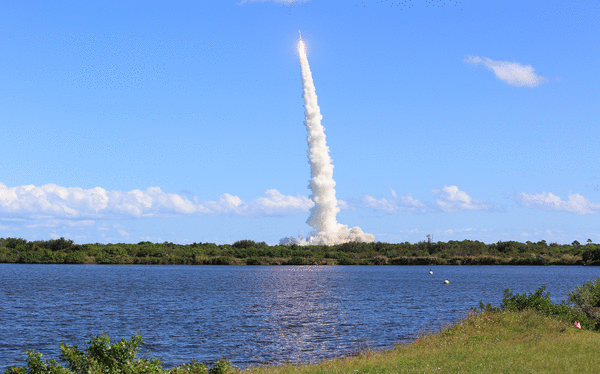
United Launch Alliance’s beleaguered Vulcan rocket returned to service Sunday, but 10 minutes after launch, it “suffered an anomaly,” failing to deliver the 40 satellites it was flying for Amazon.
“Every flight generates data, and every flight teaches us something. Since the anomaly just occurred, we don’t have any specific data yet to understand what occurred today,” ULA said in an emailed statement.
The flight was the first for the rocket in more than nine months as ULA worked through an issue related to its solid rocket boosters.
“ULA exists to provide assured access to space for our nation and for the customers who depend on us. That purpose is why we take on some of the hardest missions in spaceflight, and why we hold ourselves to the standard of mission success. Today, we did not meet that standard,” the company stated. “We will work closely with our customer and other appropriate organizations to find the cause, determine the appropriate corrective action, and return to flight as quickly as possible.”
Things were looking good for the rocket, which blasted off under clear blue skies streaking over the Space Coast from Cape Canaveral Space Force Station’s Space Launch Complex 41 at 12:40 p.m.
Outfitted with six solid rocket boosters in its most powerful configuration, the rocket produced nearly 3.8 million pounds of thrust at liftoff. On board was the heaviest payload of any ULA rocket ever — 40 Amazon Leo satellites weighing nearly 53,000 pounds. This batch was supposed to add to Amazon’s burgeoning broadband internet constellation. It was the first of 38 planned launches to were supposed to help reinvigorate Amazon’s game of catchup to SpaceX’s lucrative Starlink satellite program.
That will have to wait.
“ULA is committed to full transparency with our customers, and they will have visibility into the investigation process, which utilizes rigorous methodology and corrective action,” the company stated.
Vulcan is ULA’s replacement for its remaining Atlas V and already retired Delta IV family of rockets, This was only the fifth launch of Vulcan since its debut in 2024, though, and that first flight came years late because of development delays.
Its last launch on Feb. 12, which was Vulcan’s first national security mission, saw one of its booster nozzles burn off during ascent, a problem that also happened on its second launch, and one that ULA leaders had initially said was solved. The incident pushed the Space Force to declare it would not launch again on Vulcan until the problem was solved.
So did the nozzle issue get fixed? There was no visible issue on its trip to space Sunday, and ULA had stated before launch that it expected more reliability. In a press release, officials said they understand how the burn-through occurred on the last flight, but had not nailed down the culprit. Instead, ULA “identified several potential contributors which have been mitigated through design and process improvements to the nozzle.”
The boosters, though, broke away as planned, and whatever happened to the rocket occurred after they did their job.
This marks the first full failure of a ULA mission, its having successfully flown 173 payloads to orbit since it was founded in 2006 as a joint effort between Lockheed Martin and Boeing.
For Amazon, the failure will be disappointing. The company is counting on ULA to start making good on its contract to provide a steady supply of its satellites to space. ULA constructed a second vertical integration facility (VIF) at SLC-41 dedicated to support Amazon flights.
Melissa Wuerl, director of launch for the Amazon Leo program said the second VIF, which Amazon helped fund, will help the company hit its target.
“We can actually process two missions at the same time, which is something that we’re going to realize soon,” she said. “We’ll be able to do another launch within a matter of days or weeks instead of months that we would normally have in between launches.”
Amazon has plans to get more than 3,200 satellites over the next few years, with nearly half to be flown by ULA. It already has deployed more than 100 ground stations around the world and has lined up hundreds of thousands of customer terminals.
“We’re right on the verge of being able to deliver the initial service to our customers,” Wuerl said. “It’s been years in the making and it feels like we’re right there.”
To date, Amazon has managed to get only 398 satellites off the ground through a combination of launches on ULA’s dwindling supply of Atlas V rockets, SpaceX Falcon 9 missions and Arianespace’s Ariane 6 rockets.
SpaceX, meanwhile, surpassed this year 13,000 satellites launched since the first operational ones were deployed in 2019, according to statistics maintained by astronomer Jonathan McDowell.
Blue Origin was also supposed to have begun Amazon Leo launches this year with its New Glenn rocket, but an explosion at Canaveral’s Launch Complex 36 damaged the pad and New Glenn won’t fly again until 2027.
ULA had to switch to rely on the smaller Atlas V launches instead of the original plan of trading off between Vulcan and Atlas V. And then all of ULA’s available Atlas V rockets ran out with its last launch in July.
Amazon was counting on Vulcan as it has satellites in hand ready to fly. In September, the company completed the manufacture of its 1,000th Amazon Leo satellite.
Before the report of the mission failure, ULA officials had said a second Vulcan was already being prepared in Cape Canaveral that could launch before the end of the year for Amazon, but that mission will likely face delays as ULA figures out what went wrong.
ULA also has a backlog of more than two dozen national security launches for Vulcan, but the Space Force has yet to announce when it will trust its payloads back on Vulcan. After the February incident, the government said it would not fly on Vulcan again until it figured out the nozzle issue.
And with New Glenn off the board, all national security missions have flowed instead to SpaceX flying on Falcon 9 and Falcon Heavy rockets. SpaceX, though, has announced it intends to wind down its Falcon launch manifest, which limits the government’s options after 2028.
ULA had been prepared to fly as many as 24 missions a year from Florida while it also continues to prepare for launches from California.
Instead, this marked only the sixth rocket launch of the year for ULA. It was also the Space Coast’s 61st, with all but eight coming from SpaceX. Blue Origin managed one launch before the pad explosion and the other flight was NASA’s Space Launch System rocket on the Artemis II mission.
It had been 26 days since the last launch on Oct. 20.
The launch rate on the Space Coast fell off from 2025’s record 109 orbital flights because of changing priorities from SpaceX. Elon Musk’s company has only flown Falcon Heavy missions from its pad at Kennedy Space Center as it works to complete the Starship and Super Heavy launch tower at KSC’s Launch Complex 39-A.
It also stopped flying Starlink missions on Falcon 9 rockets from Florida, leaving those duties to its California operation.
There is still a chance Starship may have its first Florida launch before the end of the year. Its test launch Friday from Texas sent the upper stage to space to orbit Earth 14 times before it returned to the launch site Saturday, where SpaceX was able to successfully capture it on the launch tower. The next flight could be from KSC, which will be complete by next month.
For now, though, SpaceX has only one more launch on 2026’s manifest, a resupply mission at the end of the month to the International Space Station flying Northrop Grumman’s Cygnus spacecraft, plus ULA may launch Vulcan again.
Another Falcon Heavy launch looks to have pushed to no earlier than early January, flying Voyager Technologies’ Griffin lunar lander to the moon.
_____
©2026 Orlando Sentinel. Visit orlandosentinel.com. Distributed by Tribune Content Agency, LLC.






Comments