Adam Minter: 'Heated Rivalry' has given the NHL a test
Published in Entertainment News
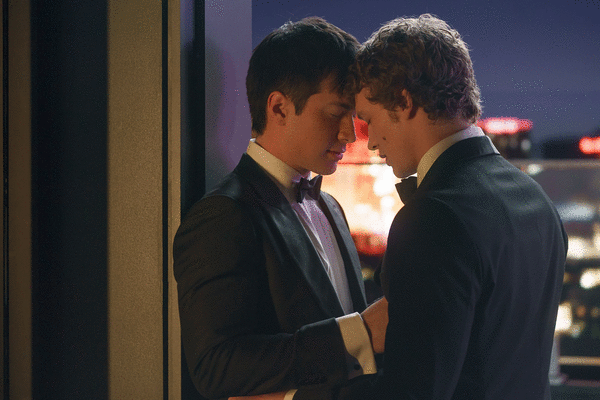
Among the four major North American men’s sports leagues, the National Hockey League is the only one that has never had an openly gay player, active or retired. And, as anyone who has spent time around hockey knows, casual homophobia has long been and remains a part of rink and locker room culture.
So, it isn’t hyperbolic to say that the NHL has been caught flat-footed by the enthusiastic attention it has gotten because of "Heated Rivalry." The viral HBO Max series about a secret romance between gay players led to a 40% increase in interest in hockey tickets, according to a post on X from StubHub.
Some NHL teams have met the moment by playing music from the show in their arenas. At least one team has shown the series’ trailer on its Jumbotron, and another has referenced the show on social media. Clearly, the league will gladly take the good PR "Heated Rivalry" is giving it. The question is whether it’s bold enough to go beyond performative gestures and do the more meaningful work that will help keep its new fans around long after the buzz fades. That’s a test the NHL doesn’t appear ready to pass.
Hockey’s notorious hyper-masculine culture has kept athletes fearful and closeted, pushing them — and potential fans — away from the game. Last week, Jesse Kortuem, a player who didn’t compete in the NHL but was a part of adult leagues, shared his coming out journey in a social media post. He credited "Heated Rivalry" for inspiring him to do so and detailed how it felt growing up and knowing that he was different. “I wondered how I could be gay and still play such a tough and masculine sport,” he wrote.Over the years, the NHL has taken steps to reverse the perception that those two identities cannot coexist. In 2017, it introduced “Hockey Is For Everyone,” an initiative to promote a more welcoming and diverse hockey environment. For example, the league committed to holding games that highlight the LGBTQ+ community. But too often, the efforts seemed half-hearted and conditional on not alienating fans accustomed to traditional hockey culture.
Aside from appealing to of its old-school spectators, the league’s most notable waver occurred in 2023, when several players refused to wear Pride jerseys. It prompted the league to ban all theme night gear, including Pride jerseys and rainbow tape on hockey sticks. The policy on tape was reversed after some players refused to abide by it, but the message was clear: the embrace of inclusion is negotiable, depending upon public pressure.
That might’ve been an acceptable approach to running a sports business decades ago. But in an increasingly fragmented media environment, the NHL is taking a real commercial risk by alienating LGBTQ+ fans and their allies.
Consider the change in how fandoms are formed. For decades, hockey fans like me started out playing the sport then grew to love the NHL by attending matchups in person or catching them on television. These days, younger fans often start somewhere else — by following an athlete on social media. That follow could be inspired by a 30-second highlight clip or maybe it’s what that player stands for off the field, such as gender equity.
This shift in fan behavior puts leagues at a crossroads. If they dismiss the values that drew these fans in, they risk losing people who showed up through an athlete’s platform. But if they meet that audience where it is, they can build a relationship that lasts — even as individual stars (and their feeds) trend, then fade.
Women’s leagues understood this idea years ago, centering inclusion as a core value — and not just an annual Pride Night sideshow. That’s why anyone who has attended both NHL and Professional Women’s Hockey League games can see the difference. The PWHL, which debuted in 2024, made LGBTQ+ equality and visibility part of its DNA. It collaborates with queer artists and organizations, the stadium kiss cam isn't reserved only for straight couples and athletes talk openly about their sexuality.
Inclusive messaging clearly hasn’t deterred fans. During the 2024-25 season, the PWHL’s second, the league reported that average attendance was up 27%, to more than 7,200 fans per game. Of course, there are many other factors that have gone into the growth of the PWHL and other women’s sports leagues that embrace diversity. The quality of play, for starters, is entertaining and only getting better thanks to the development of talent pipelines.
But values matter too. A lot of newer fans don’t just want a sport — they want an entertainment product that reflects what they care about. And that audience isn’t limited to LGBTQ+ viewers, as the fans of "Heated Rivalry" have demonstrated. Straight women comprise a significant and particularly vocal portion of the show’s fans. Ignoring this demographic is a risk. Studies show women sports fans are critical to growing league businesses.
The NHL has a choice to make. It can continue relying upon HBO for diversity messaging, or it can lead on its own. It won’t be easy; the league must be willing to push back against fans and players who don’t always embrace inclusive values.
But if the willingness is there, so is the path forward. For starters, the NHL should reverse the ban on Pride and other theme night jerseys, encourage its teams to sponsor and participate in Pride events beyond the rinks (and Pride month), and release regular reports on the state of diversity across the business (it has only released one, in 2022).
Meanwhile, with consent, hockey’s marketing machine should find ways to regularly highlight the queer fans who have been showing up for years, as well as those who are buying tickets for the first time.
A new generation is ready to fall in love with hockey. The NHL has an opportunity to build a league that loves them back.
____
This column reflects the personal views of the author and does not necessarily reflect the opinion of the editorial board or Bloomberg LP and its owners.
Adam Minter is a Bloomberg Opinion columnist covering the business of sports. He is the author, most recently, of “Secondhand: Travels in the New Global Garage Sale."
©2026 Bloomberg L.P. Visit bloomberg.com/opinion. Distributed by Tribune Content Agency, LLC.









Comments