Skiers or cinephiles: How the Sundance fest's move could affect Colorado's slopes this winter
Published in Entertainment News
DENVER — In October 1969, just a month after “Butch Cassidy and the Sundance Kid” premiered, Robert Redford schusshed into theaters again as skier David Chappellet in the film “Downhill Racer,” the fictionalized story of a U.S. Ski Team member who heads to Europe to test himself on the Alpine slopes.
“For me, personally, skiing holds everything,” Redford told film critic Roger Ebert during the filming of “Downhill Racer,” which was partially set and shot in Colorado. “I used to race cars, but skiing is a step beyond that. It removes the machinery and puts you one step closer to the elements. And it’s a complete physical expression of freedom.”
Skiing is partially why the Sundance Film Festival, which Redford co-founded and named after his breakout character in “Butch Cassidy and the Sundance Kid,” moved to Park City, Utah, in 1981 — three years after it was founded in Salt Lake City. Tapping the winter-resort crowd was one of the goals for the nascent event.
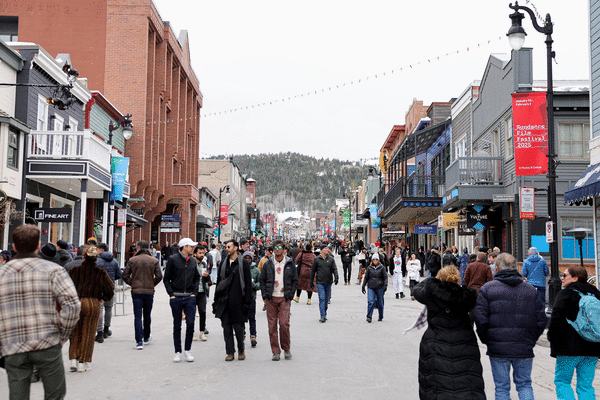
But it’s also partially why the festival left Park City after 45 years, in favor of Boulder, where it will debut Jan. 21-31, 2027.
In its final years there, Sundance outgrew Park City, as the 85,000-some film buffs who attended pushed short-term rental prices to ever-higher peaks for 10 days during the height of the ski season. And rather than benefit from those visitors, only about a quarter of them made plans to hit the slopes in Park City, according to Sundance’s own economic impact report from 2025. And that was even with festival attendance rising by 17% over 2024.
While the town’s namesake resort and Sundance never battled too much in public, their tense relationship was clear as the festival annually emptied out the slopes, The Associated Press has reported, drove up prices, and soaked up hotel rooms. Never mind the growing political headaches as conservative Utah laws clashed with Sundance’s progressive brand, such as the state banning transgender people from using public bathrooms that fit their gender identity.
Boulder is a different story when it comes to skiing, however. While Eldora Mountain Resort is just 21 miles away, the closest major ski area is Winter Park, a full 90 minutes from town. That’s a far cry from Park City, which boasts the close-in Park City Mountain, Deer Valley, and Woodward Park City. Notably, Park City Ski Resort is owned by Broomfield-based Vail Resorts, and Deer Valley is owned by Denver’s Alterra Mountain Company, which runs Winter Park. So the impact might be diffused.
Still, Colorado’s ski industry — which generates $4.8 billion in annual economic output, according to a study by RRC Associates, or about twice Utah’s $2.1 billion — is keeping a watchful eye on Sundance. Major festivals and sporting events on the Front Range can affect their business if fewer people go to the mountains due to clogged I-70 traffic, according to research from Colorado State University historian and author Michael Childers.
The lion’s share of Sundance attendees are expected to be from Colorado, which means some of them won’t be skiing that weekend. That in itself could be a problem. This winter, ski mountain owners will be particularly sensitive after a low-snow season saw business decline by an alarming 24% during 2025-26, from about 13.8 million to 10.5 million visitors.
Two of the biggest operators of Colorado ski resorts contacted by The Denver Post declined to talk about their internal takes on the festival’s impact, including Aspen One (which owns Buttermilk, Aspen Mountain, Snowmass and Aspen Highlands) and Vail Resorts (Vail Mountain, Beaver Creek, Breckenridge, Keystone, and Crested Butte).
But a few resort, hotel and tourism professionals said Sundance’s effects could be felt in any number of ways, both positive and negative.
Arapahoe Basin, for instance, which, like Deer Valley, is owned by Alterra, is choosing to take a positive approach.
“Sundance is a great thing,” said senior communications manager Shayna Silverman, “because it welcomes some folks from out of state who may not have been able to visit our resorts before.”
Copper Mountain, which is owned by Utah-based POWDR, said skiing has long been part of Sundance, and the move to Colorado is an opportunity to maintain that connection to mountain communities.
“Copper is easily accessible from the Front Range, and its natural layout separates terrain by difficulty, allowing groups with different ability levels to enjoy the slopes together,” said communications manager Olivia Butrymovich. “There are also several options for reaching the resort without a car, including weekend Snowstang service directly to Copper and Bustang and Pegasus service to Frisco.”
Optimism and caution
Sundance has signed a 10-year commitment to Boulder, and that holds longer-term potential for Colorado ski resorts, said Timothy Wolfe, director of the Colorado Tourism Office. Yes, most of Colorado’s ski traffic comes from within the state. But Sundance out-of-staters may increasingly look outside Boulder to add value to their trips.
“When a large event like this moves to your city, you’re always looking for opportunities to showcase the entire state,” he said. “Here, any type of (positive) ski impact is only going to grow over time.”
Even as most Colorado resorts declined to talk about planning for Sundance or its impact, some ski industry, hotel and tourism sources said the “halo effect” would likely trend westward from Boulder along the I-70 corridor. In fact, I-70 is “just an extension of the Front Range in the Denver metro area into the mountains,” researcher Childers said.
“Most skiers ski 5 to 10 days a year if they’re very active; it’s very few people who go 100-plus days a year,” he said in a 2023 interview with Colorado State University’s Department of History.
Five to 10 days is about the length of a Sundance stay — or longer, if a Colorado vacation is on the table — and a few resorts have connected those dots.
“Internal conversations are starting to pick up,” said Jen Miller of Winter Park Ski Resort, noting that the resort is the closest to Boulder.
Sundance officials declined to discuss potential ski resort impacts in Colorado, even as dozens of other angles of the festival have been examined in detail since Boulder was chosen as its new home in March 2025.
Studies have projected a $196 million infusion from Sundance-related spending during an otherwise slow time of year in Boulder; a jump in prices for Boulder’s hotel rooms and short-term rentals; and the eventual reinvestment (through visitor spending) of the$71 million in financial incentives and support wrangled by tourism boosters and politicians to attract the event during a national bidding process.
Resorts don’t typically make far-ahead plans based on winter cultural events on the Front Range, they said, despite their themed weeks, reunions, sports competitions, and opening/closing-season parties. That helps them stay nimble based on changing weather conditions, with most of the planning occurring around the busy holidays and school breaks.
Sarah Beatty, director of communications for Colorado Ski Country USA, also said Sundance may be a great time for locals to hit the “wide open” slopes. Just like in Utah, it’s arriving at the height of Colorado’s ski season.
“It’s fair to say that a number of resorts are thinking about ways to support film-and-ski-lovers,” she said, adding that she’s not aware of industry-wide plans or promotional deals with Sundance. “Many resorts have lift ticket and rental deals available now, but those deals will start to disappear as the season draws closer.”
“Logistically, it makes a lot of sense to come up here from Boulder, since we have public transportation that goes from Downtown Boulder Station straight to the chairlift,” said Sam Bass, communications director at Eldora. “You can pop up here during the day and catch a screening at night. We may also be a relief valve for locals who want to escape the chaos of the festival.”
Eldora is part of the nationally known Ikon Pass, which may also attract a handful of out-of-state attendees who don’t feel like booking separate lift tickets, Bass said. But most of the business Eldora tracks still comes from locals in the area spanning north of Denver to Fort Collins.
Longer stays, more spending
At Boulder’s Limelight Hotel, which sits across from the University of Colorado campus and its Sundance screening venues, bookings for the middle and end of the festival were slower to arrive than for the first five days, said general manager Joe Steiskal.
“But one thing nobody’s talking about is that while most people want to come to those first four or five days, there’s more room on, say, Day 7,” said Steiskal, also the former chairman of Visit Boulder. Now he’s starting to see more Limelight bookings that begin during the festival, but continue through early February.
“That could mean they’re taking a trip up the mountains and skiing, but it could also mean sticking around Boulder or going to Denver,” he said. “We just don’t know yet how many (Sundance) visitors are going to make a vacation of it.”
Some resort towns host their own, long-running film festivals, from Telluride to Vail and Breckenridge. They take place throughout the year, sometimes in the tourism-light shoulder seasons, and have a measurably positive impact on spending, according to the Colorado Tourism Office, which doles out grants to small festivals.
“Having a festival at a resort is not a new thing to do, but what some people don’t understand is that these destinations add a whole lot of extra value to the experience,” said Connor Nelson, director of the Winter Park Film Festival, which wrapped up its fourth year in September with record attendance of 1,700.
Nelson, a Winter Park native now based in Los Angeles, integrates fly fishing, hiking and running into his festival that help give it a uniquely Winter-Park feel, he said. He holds the festival’s awards ceremony at the top of the mountain, requiring filmmakers and fans to ride gondolas.
“As far as I know, we’re the only film festival in the entire country that has that,” Nelson said. “Sundance likely wants to keep everybody in Boulder, so it will be interesting to see how many people migrate over the mountains. But their arrival can only be good for Colorado as a state.”
©2026 MediaNews Group, Inc. Visit at denverpost.com. Distributed by Tribune Content Agency, LLC.











Comments