Commentary: Druski was a star before netflix came calling
Published in Entertainment News
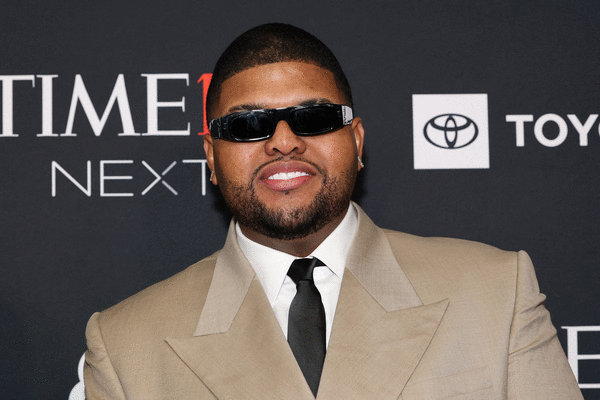
At the beginning of his "Saturday Night Live" monologue, comedian Druski nodded to his roots as a digital creator, which made his hosting gig historic: “Apparently, people are saying I'm the first internet-content-creator-social-media-influencer-only-make-you-laugh-on-your-phone-TikTok-and-YouTube-and-Instagram star to host this show.”
It was a pat on the back that doubled as a joke about how hard it is to define his particular kind of stardom. Less ambiguous is his appeal, which drew the most "SNL" viewers — 5.6 million — of any host in two years. And that’s not even his most impressive accomplishment this month. He also signed a multiyear deal with Netflix, one of the world’s biggest streaming platforms.
His breakthroughs signal a necessary shift in access to Hollywood, particularly for Black creatives, and his rise offers a roadmap for navigating an industry that has traditionally made room for so few of them.
It’s natural to compare Druski’s trajectory to other eventual stars who began their careers with online content creation before securing deals with major networks. Quinta Brunson and Issa Rae, both groundbreaking in their own right, immediately come to mind. Brunson parlayed the success of her Instagram skits into a job making videos for BuzzFeed, eventually giving her the opportunity to develop "Abbott Elementary" for ABC. Rae used her YouTube series "The Misadventures of Awkward Black Girl" to create an audience big enough to help convince HBO to greenlight Insecure.
But the difference is that "Abbott Elementary" and "Insecure" became television vehicles that helped turn Brunson and Rae into mainstream stars. When Druski signed with Netflix, he had already reached that level of celebrity — big enough that he could grace the cover of Time magazine and host SNL.
The 32-year-old reached this point by focusing on himself as both the product and the distributor, benefiting from a social media ecosystem users increasingly turn to for entertainment. Before he became a master of short-form comedy, Rae and Brunson had already used the same system to break through on YouTube in 2011 and Instagram in 2014, respectively. But by the time Druski began building his career there, social media-first comedy had become closer to the status quo, for creators producing it and audiences seeking it out.
A 2022 Ipsos survey found that 64% of millennials and 79% of Gen Zers often use social platforms for quick laughs. By then, Druski had proven he was readily able to supply them. Since posting his over-the-top satires on social media in 2017, he has amassed nearly 40 million followers across his social media accounts, including 6.1 million YouTube subscribers. Druski also benefited from the early support of Black-owned media and the hip-hop community. Revolt TV gave him his own digital series in 2021, and rappers have reposted his sketches and featured him in music videos.
Together, that audience and cultural backing helped reverse the power dynamics between him and the broader entertainment industry. During a recent interview on The Diary of a CEO podcast, Druski said he made “years and years of proposals” earlier in his career that were rejected by Amazon and Netflix. Now the latter is paying to license his viral skits, including "Coulda Been Records" and "Coulda Been Love," and to create new exclusive programming.
Eyeballs in the attention economy are a form of currency that all creators covet, but they are especially valuable to creators of color as long as Hollywood remains stratified by race. According to UCLA’s 2026 Hollywood Diversity Report, progress on representation reversed in 2025, with fewer people of color holding a smaller share of directing, writing and lead acting roles in streaming films. Researchers found, for example, that in 2025, the proportion of lead actors of color stood at 36% — a noticeable drop from 2024’s 51%. The study also found that Black actors accounted for only 6.5% of leading roles in theatrical films in 2025, while White actors accounted for 76.9%.
Individual prejudice and bias are factors, but so are broader systemic gaps in opportunity. A National Endowment for the Arts report that analyzed 2024 federal education data found that only 26% of American public schools offered standalone theater classes during the regular school day. Arts instruction was also less common at schools where more than 75% of students were people of color than at schools with predominantly White student bodies. For students without the means to seek training their schools don’t provide, that disparity can narrow opportunities to develop their talents long before Hollywood enters the picture.
Inspired by the representation they see, aspiring Black creatives can try to circumvent those barriers with social media, a bit of imagination and a plan. Writing, producing and acting out skits at home can give them a way to hone their craft while building a body of work that initially doubles as an audition tape for major networks and streaming services.
Like Rae, Brunson and others before him, Druski used a DIY ethos to build an entertainment proof of concept that was too enticing for Hollywood to ignore. But he has taken the path they helped establish a step further.
Creator-owned IP is hardly new, but by the time Netflix bought into Druski’s, his social media work had already taken him places creators typically needed major studios and networks to reach.
Who knows? The entertainers coming behind him may be able to push that independence even further.
____
This column reflects the personal views of the author and does not necessarily reflect the opinion of the editorial board or Bloomberg LP and its owners.
Peter A. Berry is a culture journalist with bylines in XXL, Variety, COMPLEX, Rolling Stone, Okayplayer and more. He also writes the "Rate It Or Love It" newsletter on Substack.
©2026 Bloomberg L.P. Visit bloomberg.com/opinion. Distributed by Tribune Content Agency, LLC.







Comments