Water conservation works, but climate change is outpacing it: Phoenix, Denver and Las Vegas offer a glimpse of the future
Published in Science & Technology News





When a drought turns into an urban water crisis, a city’s first step is often to limit lawn watering and launch a campaign to encourage everyone to conserve. It might raise water-use rates or offer incentives for installing low-flow devices.
While demand management techniques like these have had a lot of success in reducing water use, our new research suggests that they may not be effective enough in the face of climate change.
We looked at three cities in the Colorado River Basin – Phoenix, Las Vegas and Denver – to understand what each could do to increase demand management amid water shortages and how far those methods could go as temperatures rise and the Colorado River’s flow weakens.
The results suggest the region needs to be thinking about bigger solutions.
The Colorado River provides drinking water to nearly 40 million people and irrigation for over 5.5 million acres of cropland. But it has experienced a significant drop in water availability in recent decades due in part to rising demand for water and a long-running megadrought in the Southwest.
To ensure that water is shared across boundaries, the seven states within the basin agreed to the Colorado River Compact in 1922, setting limits on water withdrawals from the river. Since then, the region has adopted additional rules, agreements and policies, collectively termed the “Law of the River.” But despite this compact, which the states are renegotiating in 2026, the basin’s water supply is shrinking.
Research shows that the region is likely to experience more intense, frequent droughts that last longer due to climate change, putting the water supplies for farms, people and energy systems at risk.
As researchers who study the impact of climate change on water systems, we wanted to see if demand management techniques could help under these intensifying conditions.
Many demand management policies are reactive and only go into effect when sources run low.
These reactive policies can be successful during the scarcity period, but there is often a rebound effect: Water consumption can actually increase afterward.
We integrated survey data with a computer model of water availability and demonstrated that there can be long-term benefits to the local water supply if communities encourage positive attitudes toward conservation.
The survey focused on how people think about water conservation and climate change, drawing on a large body of research that shows people who care about the environment often take eco-friendly actions. Building off these ideas, we segmented the population into groups that shared similar views on water conservation and found that a large proportion of residents supported water conservation but weren’t actively participating in conservation programs within their communities.
We then used the computer model to explore how changing attitudes, and subsequent conservation behavior, could affect water supplies under climate change.
Our research shows that individual actions, when implemented by a lot of people, can measurably improve water supplies’ reliability.
A great example of the benefits of long-term behavioral changes is Las Vegas.
Las Vegas is in many ways viewed as a city of excess; however, since 2002, the city has reduced its per-capita water use by nearly 60%, even as the population grew by more than 50%. It reached these savings through efforts to reduce seasonal irrigation, replace water-intensive landscaping and require new developments to be sustainable, along with the treatment and reuse of wastewater. Today, Las Vegas recycles nearly all of the water used indoors and returns it to Lake Mead.
Phoenix, another desert city, also runs successful conservation programs. These programs focus on converting grass lawns to desert-friendly landscaping and encouraging owners to fix leaks and install smart meters and low-flow devices. These programs led to a 20% reduction in water use over 20 years, while the population grew by about 40%.
These cities have shown that demand management can work, but there are limits on how much these techniques can do as water supplies dry up.
When we added projections of future climate change to our model, we found that conditions could lead to so little water being available that these demand management methods won’t be able to keep up.
In other words, climate change may create situations where water supplies are still severely limited, even after people reduced their consumption by up to 25%.
For example, under a plausible, moderately high emissions scenario, Phoenix’s available surface water supply was forecast to drop below the historical average by 2060. Even when we simulated higher participation in conservation programs, there was no noticeable change in the water availability, suggesting that any savings from reducing demand were counteracted by losses from upstream flow reductions. Encouraging people to use less water is a start, but there is a limit to how much people can conserve.
We found similar results in Denver under a moderate emissions scenario and in Las Vegas under a moderately high emissions scenario, indicating that even moderate climate change could lead to extreme scarcity conditions that are not manageable through demand-side changes alone.
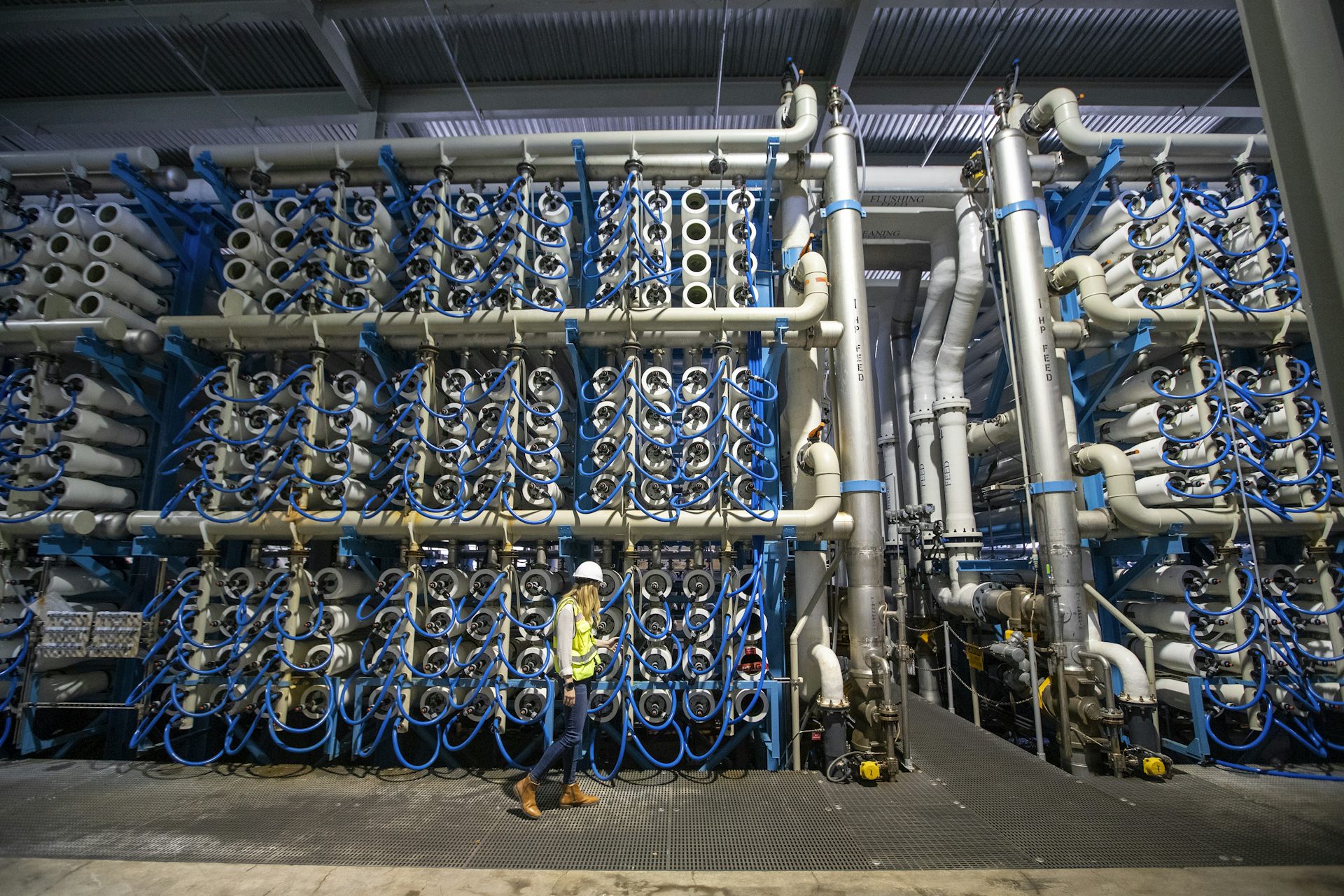
In these cases, it may be necessary to find other creative water sources, such as water reuse, desalination or limiting consumption in other sectors, such as agriculture or energy, to maintain the municipal supply.
These solutions, however, take time and money to implement. Desalination is incredibly expensive. A recently built desalination plant in Carlsbad, California, cost US$1 billion – four times the initial estimate.
Other solutions, such as reducing agricultural water use, require significant buy-in from local farmers and could result in producing less food.
Reducing the water consumed for electricity generation would require significant investment in renewable energy technologies that have lower water requirements than fossil fuels and nuclear energy.
While large-scale solutions like water reuse systems and desalination can be expensive, these costs might be necessary to maintain adequate water supply in the region, because simply encouraging people to use less won’t be enough.
This article is republished from The Conversation, a nonprofit, independent news organization bringing you facts and trustworthy analysis to help you make sense of our complex world. It was written by: Renee Obringer, Penn State and Dave White, Arizona State University
Read more:
Toxic dust from California’s shrinking Salton Sea is harming children’s lung growth – our study tracked the impact in 700 kids
Winter’s alarmingly low snowpack offers a glimpse of the changing rhythm of water in the western US
Sixth year of drought in Texas and Oklahoma leaves ranchers facing wildfires and bracing for another tough year
Renee Obringer received funding from the National Science Foundation.
Dave White received funding from the National Science Foundation.







Comments