Supreme Court to decide on whether Trump’s voting-by-mail rules can go into effect – but might not rule yet on whether they’re constitutional
Published in Political News
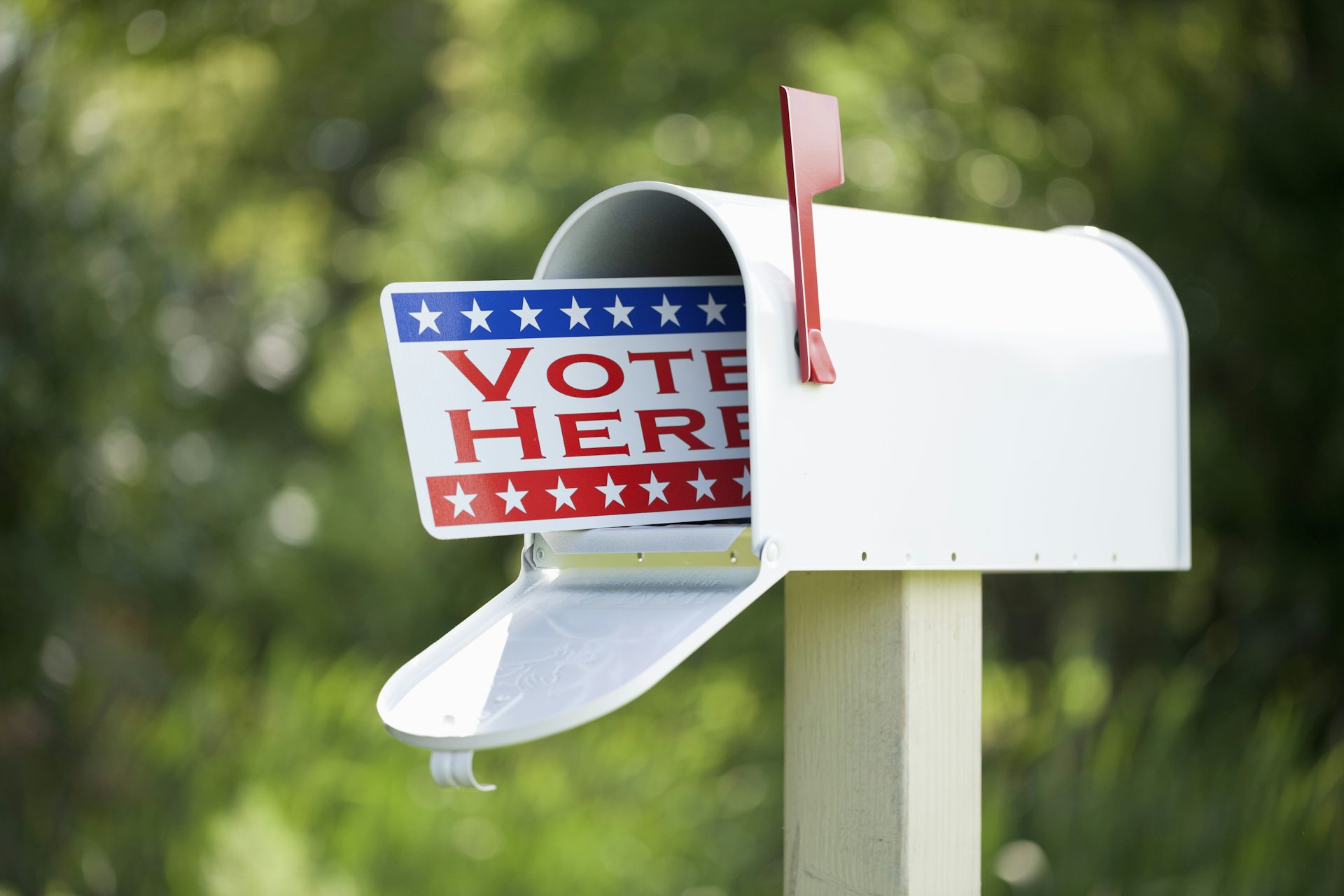

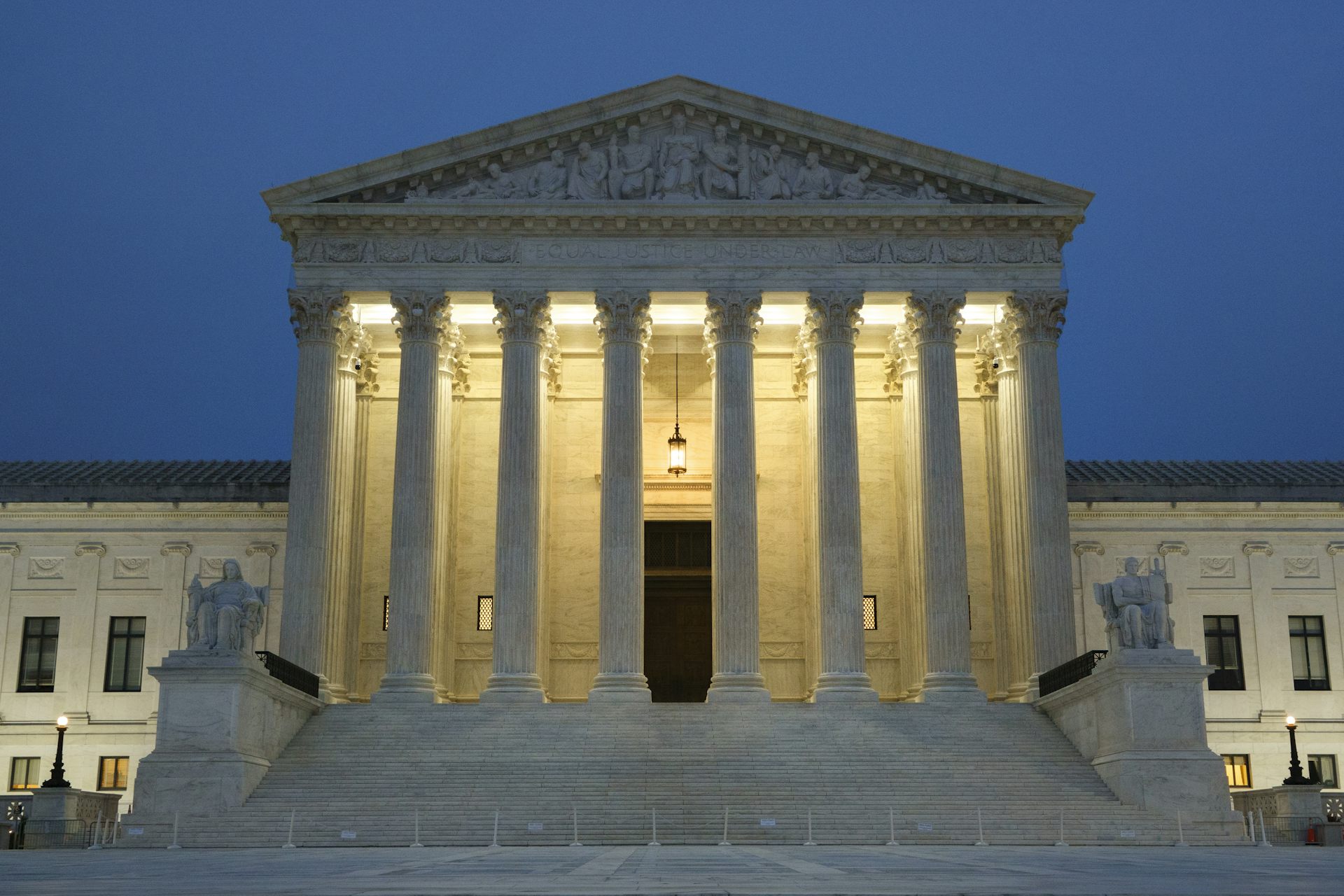

The Trump administration’s proposal to crack down on voting by mail in federal elections – articulated in a March 2026 executive order – faces its toughest legal test so far, as the Supreme Court decides whether to allow the measure to go ahead, or maintains a lower court’s block on its implementation.
Despite offering no evidence of widespread fraud, the White House has said the many measures it wants to put in place will “enhance election integrity via the United States Mail.” Those measures include using the Department of Homeland Security, the U.S. Postal Service and the Department of Justice to vet the eligibility of voters, establish new standards for mail ballots and who can use them, and investigate and prosecute any state and local officials who issue federal ballots to ineligible voters, including noncitizens.
Two major lawsuits were filed to stop the administration from carrying out plans related to the Postal Service. The lawsuits say the plans would result in widespread disenfranchisement and that the administration had no constitutionally granted authority to interfere in how states run elections.
The cases have worked their way through lower courts, and now the Supreme Court is considering the plans for the second time, having allowed them on Aug. 24, 2026, to go ahead in a technical decision that did not deal with the substance of the administration’s plans. A federal court then issued an injunction to stop the rollout of the Postal Service plans, and after the Trump administration appealed that injunction, the Supreme Court is now, finally, considering whether the injunction should be lifted and the administration’s plan regarding new mail-in ballot rules can be carried out. The Conversation U.S. Politics and Legal Affairs Editor Naomi Schalit spoke about the importance of the legal battle with John E. Jones III, the president of Dickinson College, who served for almost two decades as a federal court judge.
Schalit: I’d like to talk less about the legal issues and more with you about the importance of this case. I thought I’d start with a really obnoxious kind of question that I have never asked before in my whole career: On a scale of 1 to 10, with 10 being the most important and 1 being the least, how important is this?
Jones: Ultimately, the decision in this case is at least a 9, if not a 10. It has the potential, if decided in a certain way, to interfere with the franchise of voting in a way that the federal government has never attempted to do, and certainly the president has never attempted to do before. It literally could disenfranchise thousands and thousands of voters, depending on where the decision lands.
Has it happened before that such a momentous case with potential ramifications for voting has come to the Supreme Court this close to an election? The midterms are less than 60 days away.
I can’t think of any historical analog to this case. My overarching sense from a process standpoint is that it didn’t have to be this way. The Supreme Court could have decided it on the first go-round, when it rendered the decision that allowed the order to go ahead by staying the injunction from the lower court and would not address the merits of the challenger’s claims.
You’re a former federal judge. You understand the culture, how things work. How will the justices approach consideration of this case?
The Supreme Court doesn’t convene its term until October. It is not uncommon for the justices to sort of scatter and do different things. Some teach, some lecture, some write books, some probably relax during the break. That creates some logistical difficulties when there needs to be a coalescing of the members of the court.
The briefs are immediately due, and it does not appear that they’re going to have oral argument, since this is coming off the so-called shadow or emergency docket.
Given all those things, and the urgency with which some resolution is required in light of the upcoming election, I am going to go out on a judicial limb and say that I think what the court will likely do is engage in an exercise in balancing. We call it a balancing of the equities. To determine whether one side or the other will suffer irreparable harm.
In other words, who is harmed more? That’s what happens when you enter an injunction. You have to weigh the equities. That’s what courts do.
So it would be easy to see that the justices could say that, because of state elections apparatus, the states stand to be harmed more than the administration if this kind of patched-together regime is implemented by the Postal Service. They could say, in fact, it may be impossible to implement it in time for the midterm elections.
I think it is highly possible that they will deny a stay of the lower court’s injunction and not allow the executive order to be implemented, at least the part involving the U.S. Postal Service, which is the problematic part in terms of this election. And they may not rule on the constitutionality of the executive order until sometime after the election, perhaps after they conduct oral argument and they have an opportunity to more thoroughly consider the case.
So instead of entering this discussion thinking about whether the executive order was constitutional, they would be beginning their consideration by looking at the very immediate problems that may be caused by it, and asking, “Where’s the greatest damage going to be done if we let this go on or if we stop it?”
That’s precisely correct. An injunction or a temporary restraining order is not a decision on the merits of a case. When a court enters an injunction or vacates an injunction, the court has got to look at where the greater harm occurs if it acts and when it acts.
The government’s argument, which is that the greater harm is to our democracy because of the potential for fraud and for noncitizens to vote, is not supported by the record in this case.
From the standpoint of the challengers, they assert the almost sheer impossibility of implementing this. In fact, there are major logistical problems. It appears that the Postal Service is cobbling the process together on the run, so to speak.
I think the court might say that the public interest and equities lead us to say that we’re just going to deny the stay and thus keep the injunction in place. It’s not workable for this election. But we will reserve for another day – another election, so to speak – whether in fact the executive order is unconstitutional.
This article is republished from The Conversation, a nonprofit, independent news organization bringing you facts and trustworthy analysis to help you make sense of our complex world. It was written by: John E. Jones III, Dickinson College
Read more:
Narrow mail‑in voting ruling by Supreme Court adds uncertainty to midterm elections without addressing constitutionality of Trump’s executive order
Mail‑in voting: Trump administration appeals to Supreme Court to revive executive order setting limits, rejected by lower courts
Why Trump can’t just decree changes to voting by mail – a former federal judge explains how the president’s executive order is ‘a solution looking for a problem’
John E. Jones III does not work for, consult, own shares in or receive funding from any company or organization that would benefit from this article, and has disclosed no relevant affiliations beyond their academic appointment.














































Comments