How Operation Metro Surge helped fuel Minnesota's Democratic sweep
Published in Political News
MINNEAPOLIS — Months after thousands of federal agents descended on Minnesota, the Trump administration’s immigration crackdown remained a powerful force in the state’s election. It shaped voters’ choices, mobilized volunteers, took Republicans by surprise and reached far beyond the communities where the crackdown unfolded.
An NBC national exit poll found that 58% of all voters — and 90% of Democrats — thought President Donald Trump’s immigration enforcement went too far. In Minnesota, voters carried memories of frightened children, disrupted schools and fears for relatives into the voting booth Tuesday, with many citing last winter’s federal immigration crackdown as they backed Democrats by striking margins.
Some Republicans acknowledged they had underestimated how deeply Operation Metro Surge had lodged itself in the political consciousness of Minnesotans. After the election results came in, Minnesota Republican Party Chair Alex Plechash conceded that the surge and the war in Iran had mattered more than he anticipated.
“I didn’t expect we would sweep, but I did expect we’d have some wins,” after focusing much of the party’s messaging around fraud, he said.
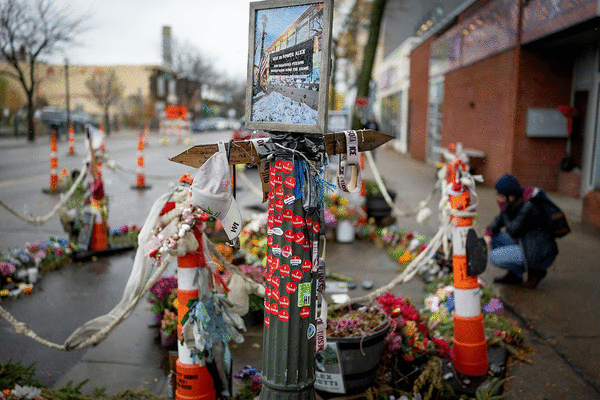
The operation brought a historic surge of federal agents to Minnesota, weeks of clashes with protesters and the fatal shootings of Renee Good and Alex Pretti. On Tuesday, it became clear just how much the crackdown had meant to many of the people casting ballots. At Pretti’s memorial in south Minneapolis, red “I Voted” stickers dotted a lamppost and poster boards, a visual spread widely on social media.
In east Duluth, David Sorensen recalled relatives in Minneapolis whose grade school had been “stalked” by immigration officers. “It just broke our hearts,” he said.
Suburban voter Marilyn Helberg, 28, said she felt a particular obligation to vote because some relatives were not citizens and could not vote themselves.
Bill Quenroe, a political independent whose wife is from Peru, voted for Democrats all the way down the ticket.
“I’ve got a 9-year-old daughter that was crying when ICE was here thinking Mama was going to get picked up, even though my wife’s a U.S. citizen for 20 years,” he said after casting his ballot.
In Hennepin and Ramsey counties — where the federal agents were most active during Operation Metro Surge — voters turned out in force, casting roughly 122,000 more ballots combined than in the last midterm election. Unofficial estimates show nearly 670,000 people voted in Hennepin County, up about 16% from 2022, while Ramsey County drew more than 251,000 voters, a 14% increase.
Together, the two counties accounted for nearly a third of all ballots cast statewide.
The DFL Party had moved early to turn resistance to the operation into electoral firepower, using the 10,000 observers it trained during the crackdown as a source for recruiting campaign volunteers. Those volunteers helped the party knock on 2.75 million doors in the run-up to the election, a record for the DFL.
Democratic candidates spent the closing days of the campaign reminding voters of the crackdown and the community response. During the DFL’s statewide bus tour, U.S. Rep. Kelly Morrison described Minnesota’s resistance as a template for standing up to the administration. Amy Klobuchar recalled how neighbors took children to school, delivered food to strangers and marched in bitter cold.
In Shakopee, DFL Rep. Brad Tabke had helped coordinate his suburban community’s response to the surge. He said the operation repeatedly came up as he knocked on doors. Two years ago, he won re-election by 14 votes. On Tuesday, his margin exceeded 3,000.
“It was a clarifying moment for people to recognize that something is wrong and something is rotten here and we need to fix it,” Tabke said. “People could see with their own eyes what was happening in their neighborhoods, they could see ICE in their backyards, chasing people and causing accidents.”
Before the polls closed Tuesday, Plechash, the GOP chair, believed the crackdown was largely in the past, while fraud in state government remained an immediate concern. Republicans had spent months making sure voters knew who to blame for the theft of public money.
Republican congressional candidate Eric Pratt said he heard a lot about fraud when he spoke to voters around the Second District, but he also said it might not have been an effective issue up and down the ticket.
He said Operation Metro Surge was likely a factor in his race, particularly because his opponent, Matt Little, was a more vocal opponent of the immigration crackdown while Pratt said he was trying to have more impact behind the scenes.
“I am just shocked because every time I went to the doors ... fraud was always right at the top,” he said. “People were linking fraud and affordability. I was shocked that didn’t translate over to being closer at the ballot box.”
Some Republicans warned that the crackdown could hurt the party in the midterms. In January, GOP strategist Karl Rove argued that Trump’s immigration sweeps were turning voters against the president and squandering an advantage on border security. Alex Conant, a former Marco Rubio presidential campaign aide, told NPR in February that losing the immigration issue would create “a real political problem” for Trump and Republicans broadly in the midterms.
In Minnesota, Republican Chris Madel ended his campaign for governor in January, denouncing the crackdown and warning that “national Republicans have made it nearly impossible for a Republican to win a statewide election in Minnesota.”
State Rep. Danny Nadeau, R-Rogers, who was ousted in Tuesday’s elections, said fraud was a big issue, but his party “may have politically overplayed that.”
“Obviously the impact in Minnesota that the federal government has had with Medicaid, with their approach to fraud, their approach to Operation Metro Surge, it’s been a heavy hand,” he said.
“That could have been done much softer and it wouldn’t have had, I think, such a big impact.”
———
(Josie Albertson-Grove, Ryan Faircloth, Allison Kite, Jana Hollingsworth, Jessie Van Berkel and Walker Orenstein of the Minnesota Star Tribune contributed to this story.)
———
©2026 The Minnesota Star Tribune. Visit startribune.com. Distributed by Tribune Content Agency, LLC




























Comments