A thank-you on Veterans Day won’t close the growing military-civilian gap
Published in Political News
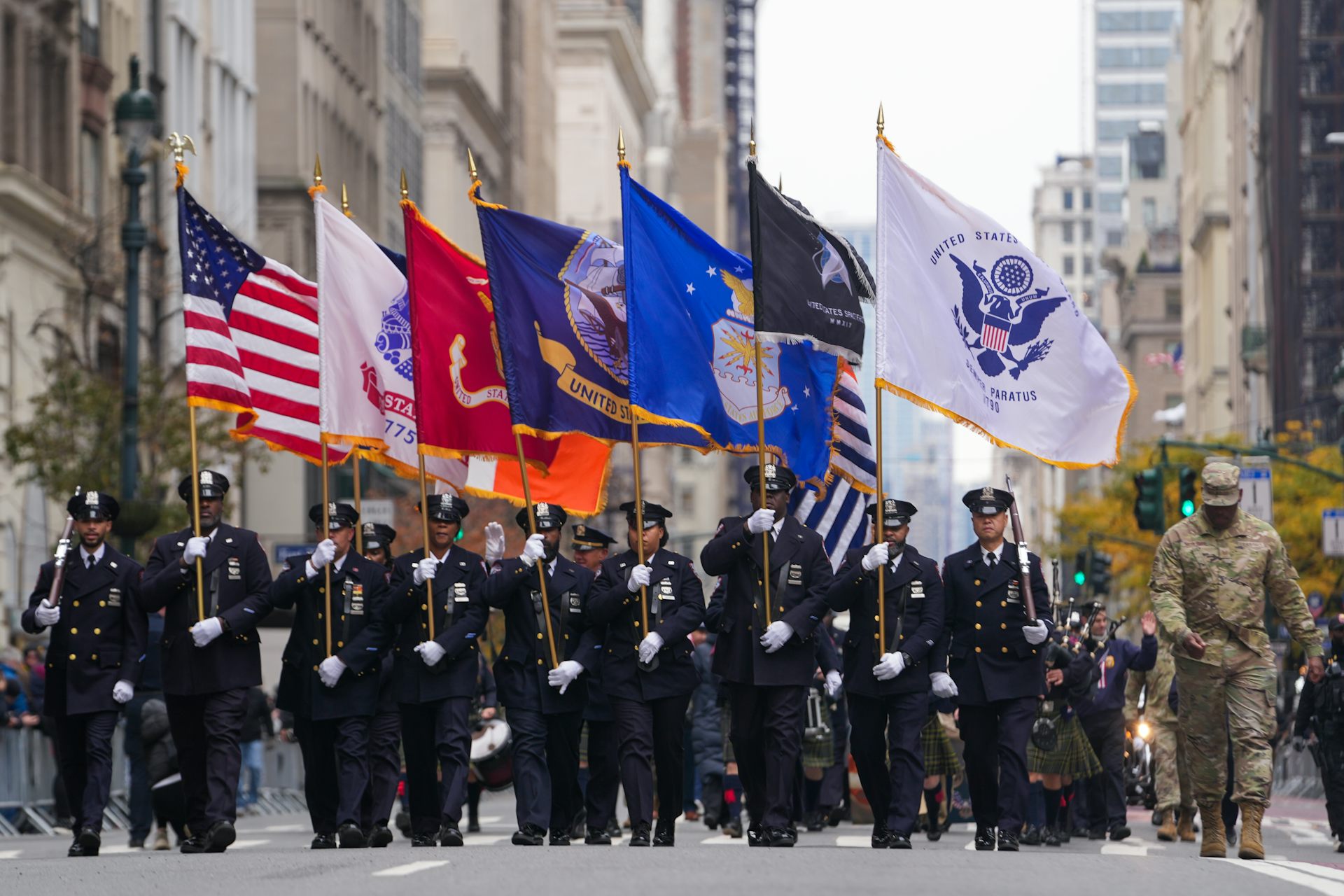
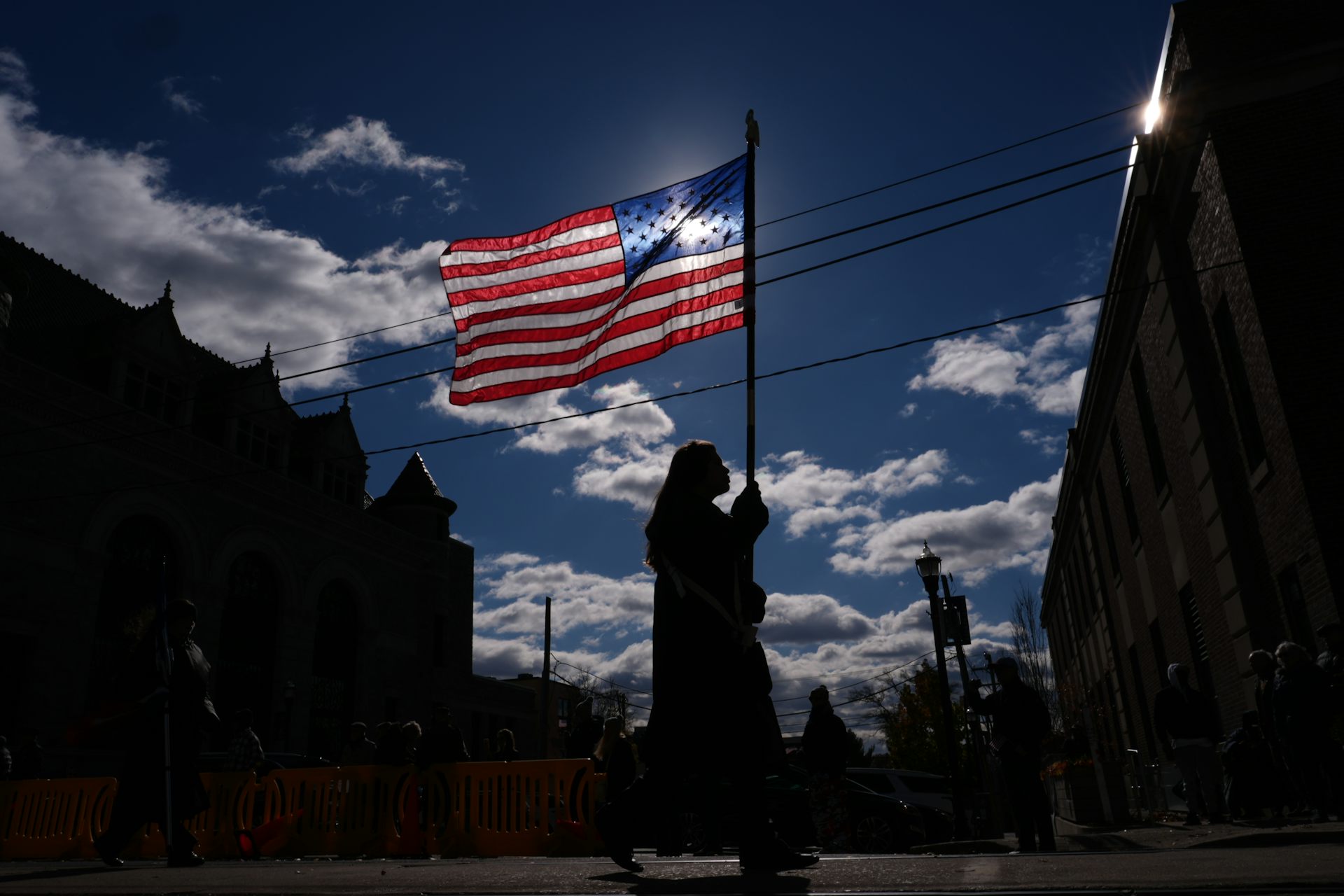
When the voice came over the plane’s PA system, it seemed familiar yet surprising: “Hello, everybody.”
“What?!” a passenger shouted, shocked. Others laughed and rose from their seats as former President Barack Obama appeared in person and welcomed the airplane of veterans to Washington before Veterans Day in 2025. They had flown from Wisconsin to Ronald Reagan Washington National Airport aboard an Honor Flight to see the capital’s monuments to military service.
“I wanted to stop by and just say thank you for your extraordinary service – to you, your family,” Obama said in brief remarks later posted to social media. “The sacrifices that all of you made to protect our country is something that will always be honored.”
Obama’s post was one of 399,000 references to veterans on the social media platform X on Veterans Day last year, Nov. 11, 2025. The annual holiday was established to “solemnly remember the sacrifices of all those who fought so valiantly on the seas, in the air and on foreign shores, to preserve our heritage of freedom,” as President Dwight D. Eisenhower proclaimed.
The hundreds of thousands of posts are compelling to me as a social scientist who studies how veterans are represented in the media. The volume of commentary illustrates Americans’ desire to recognize veterans, but it also captures the transience of public attention.
By the following Tuesday, Nov. 18, 2025, the number of references to veterans plummeted by 374,000, or nearly 94%. The news cycle had moved on.
The shift was not particularly surprising. My research shows that social media mentions of veterans peak in positive sentiment at two points each year: Veterans Day and Memorial Day. The rest of the time, the conversations on social media are largely driven by news outlets releasing stories and politicians announcing programs and events.
Indeed, social and other mass media play a role in what experts describe as a military-civilian gap. Put simply, while U.S. adults hold the military in high regard, they do not understand the institution or the experiences of its personnel despite its importance in domestic and international affairs and its US$900 billion in taxpayer funding.
This military-civilian gap can create problems when it comes to military recruitment, civilians’ ability to identify with neighbors who serve and veterans reintegrating into civilian society.
The military-civilian gap exists in part because, since the draft ended in 1973, the share of Americans who have served in the armed forces has declined. Only about 6% of adults were veterans in 2022, a decline from 18% in 1980. Compounding the issue, a decreasing proportion of U.S. adults personally know someone who has served. That means much of the population is learning about military life through mass media representation.
Journalists gravitate toward stories in which the subject matter is timely, emotional or full of conflict, because these qualities engage audiences. They operate on tight deadlines with limited resources. They also face restricted access to the Pentagon.
That means news outlets may be more inclined to cover a holiday, charity event or violent crime involving veterans than to take deep dives into the military budget or examine the role of veteran-owned businesses in the local economy.
Because of this, veterans end up typecast as heroes or victims of their service.
Politicians also influence which issues people in the U.S. see in the news or discuss on social media, but the share of members of Congress with military experience has plummeted since the 1970s.
In a 2018 study, our research team examined how news organizations in all 50 states represented veterans in news stories shared on X. In analyzing 1,460 stories, we identified three themes, which together described a majority of stories: veterans as heroes, as recipients of charity, or as victims of mental or physical harm.
Some military veterans may be heroes, and some may face challenges related to trauma, reintegrating into civilian society or navigating government bureaucracy. Such coverage may certainly be newsworthy.
The problem, according to critics of veterans’ representation in news media, is that not much else appears in the media. As one veteran told a researcher, “It doesn’t sell newspapers that Joe Smith from Davenport went to Afghanistan three times, got out of the military, went to college, and now works as an account manager for American Eagle.”
But media representations of social groups shape our perceptions of the world. A 2021 experiment found that exposure to stereotypical news stories about veterans led readers to associate veterans with post-traumatic stress disorder, a misunderstood and stigmatized condition. This, in turn, led readers to feel less desire to be socially close with veterans. The outcome illustrated how stories can have unintended downstream consequences even when journalists are covering newsworthy topics – in this case, PTSD and homelessness.
We also tested whether reading a second story – one in which veterans talked about media stereotypes – would dampen those negative effects. It worked, illustrating the importance of a news feed that provides nuance.
In another study, we asked 1,047 U.S. adults to picture a veteran, describe the veteran and then explain where the image originated. When people depended on media for their image, rather than personal experience, they called to mind stereotypical images such as homelessness, PTSD and heroism.
Given these stereotypes, a number of veterans organizations are advocating for broader, more insightful media representation. Military Veterans in Journalism and Veterans in Media & Entertainment are nonprofits that help veterans pursue professional careers in news and entertainment media, motivated in part by the potential for veterans to produce nuanced stories about military life. There are also nonprofit news organizations, such as The War Horse, seeking to bridge the military-civilian gap through storytelling and investigative reporting.
Media can draw attention to veterans. Obama’s airport surprise racked up 10.8 million views, 136,000 likes and 18,000 shares on X. But it will take more than made-for-media moments to bridge the military-civilian gap. That includes taking conversations with veterans offline.
In a 2019 study, U.S. Air Force Maj. Nicholas J. Mercurio conducted focus groups with veterans and active-duty service members and asked how they felt about “reflexive and formulaic expressions of gratitude” from the public such as “thank you for your service.”
Responses were mixed, in part because veterans assumed civilians did not understand what that service entailed. Nonetheless, there was general agreement that civilians could go beyond thank you by showing interest in the personal experiences of veterans and having sincere conversations about their jobs.
In doing so, civilians can demonstrate “interest in the individual,” Mercurio wrote, “not what they represent.”
This article is republished from The Conversation, a nonprofit, independent news organization bringing you facts and trustworthy analysis to help you make sense of our complex world. It was written by: Scott Parrott, University of South Carolina
Read more:
Where George Washington would disagree with Pete Hegseth about fitness for command and what makes a warrior
The military’s diversity rises out of recruitment targets, not any ‘woke’ goals
Veterans have fought in wars – and fought against them
Scott Parrott does not work for, consult, own shares in or receive funding from any company or organization that would benefit from this article, and has disclosed no relevant affiliations beyond their academic appointment.













Comments