Calls for Nvidia probes, new chip export limits intensify
Published in Political News
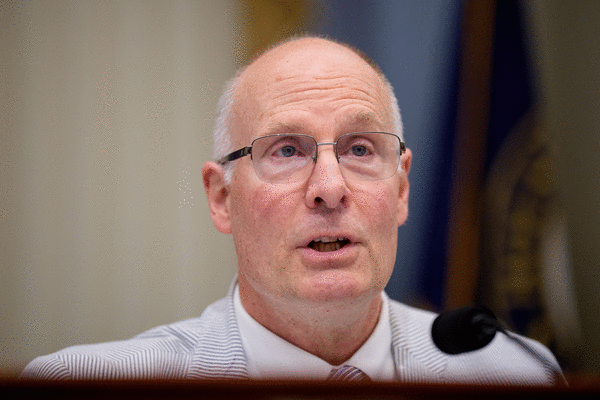
WASHINGTON — The resignation of Nvidia CEO Jensen Huang on Thursday did little to quell bipartisan demands from Congress for an accounting of potential national security fallout from his affair with an alleged Chinese spy and talk of adding tougher chip export controls to the annual defense authorization bill.
Huang admitted on Sunday to having an affair, and reports say that it was with Alice Huang, an executive at Singaporean tech company and Nvidia customer Megaspeed, whom the U.S. government believes spied for China, according to recent reports. The New York Times and Reuters reported he also had affairs with two Nvidia employees.
Senate Majority Leader John Thune, R-S.D., told reporters Thursday that he supports the Senate investigating Huang’s potential influence on U.S. artificial intelligence and chip policy.
“I think that it would make sense because of the… nature of the association… and the governments and the national security interests we were talking about here,” Thune said, though he said he thought it would be “wrong” to make assumptions about how close Huang’s relationship with President Donald Trump has been.
Senate Minority Leader Charles E. Schumer, D-N.Y., echoed the need for lawmakers to delve into the scandal, saying in a post on X that “Congress must demand answers.”
“The Trump administration must also answer for what it did once it learned about Mr. Huang’s relationship with a suspected Chinese intelligence asset. Were government officials told not to investigate because of Trump’s relationship with Mr. Huang? What did Trump know when he personally invited Mr. Huang aboard Air Force One?” Schumer wrote, referring to the president having invited Huang to accompany him to China in May.
House Minority Leader Hakeem Jeffries, D-N.Y., said at a press conference that Reps. Gregory W. Meeks, D-N.Y., and Jim Himes, D-Conn., the ranking members of the Foreign Affairs and Intelligence committees, respectively, are leading Democrats’ efforts to “get to the bottom of what has happened.”
“We need a classified briefing made available to members of Congress as it relates to the Nvidia situation,” Jeffries said. “And to the extent that our national security has been compromised, the American people deserve answers, and we’re going to work to make sure that happens.”
The investigations look likely to begin before control of Congress changes hands in January.
Rep. John Moolenaar, R-Mich., who chairs the House select China committee, told reporters that his panel, along with House Foreign Affairs and Intelligence, are in negotiations with Huang to find a date for his testimony before Congress.
“The bottom line is we need to understand the magnitude of this with respect to Chinese intelligence, possible chip diversion,” Moolenaar said. “What ways is Chinese intelligence influencing his perspective, his perspective influencing national security policy?”
Last week, the chairs of the three committees sent a letter to Huang requesting that he appear at a joint closed-door briefing. Moolenaar said that if Huang does not agree to a date, the committees will subpoena him.
Late Thursday, he joined with House Foreign Affairs Chairman Brian Mast, R-Fla., and House Intelligence Chairman Rick Crawford, R-Ark., in sending a new letter to Huang seeking a closed-door transcribed interview on Dec. 1. They also wrote to Nvidia General Counsel Tim Teter seeking a similar interview on Dec. 2. Separately, Mast wrote to Jeffrey Kessler, the Commerce Department undersecretary for industry and security, seeking his appearance at a committee hearing on Dec. 3.
Moolenaar also said that Congress needs to understand what privileged information Chinese intelligence may have gained access to through Huang and how they may have tried to influence U.S. policy.
“We need to have strong safeguards when it comes to our technology and export controls,” Moolenaar said. “And [Huang has] been one of the strongest proponents for not having export controls. This shines a whole new light on that discussion.”
Also late Thursday, Senate Banking Chairman Tim Scott, R-S.C., sent a letter to Huang calling on him to appear at a Dec. 3 committee hearing and another letter to Commerce Secretary Howard Lutnick to testify at a Dec. 10 hearing “regarding recent public reports about NVIDIA and the Department of Commerce’s role that raises national security concerns.”
NDAA outlook
A proposed manager’s amendment to the Senate’s fiscal 2027 National Defense Authorization Act bill (S 4784) contains several possibilities for those safeguards, including requirements for chip security mechanisms that would allow for verification if semiconductors are diverted to countries of concern and a ban on exporting certain very powerful chips to those countries. The House NDAA does not contain similar language.
However, House Armed Services Chair Mike D. Rogers, D-Ala., is open to the restrictions. He told reporters Wednesday that he “would like to see” semiconductor export controls in the NDAA, but that the Huang scandal had not changed his position.
Democratic Caucus Vice Chair Ted Lieu, D-Calif., told reporters on Thursday that after reports that the federal government had been aware of Huang’s affair with the alleged spy, the administration should have shared the information with Congress.
“The administration needs to be investigated for hiding this information from Congress and the American people,” he said.
Lieu also suggested that Nvidia’s reported donation to the White House ballroom project influenced the Trump administration’s decision to allow the export of some powerful Nvidia chips to China.
“There is no reason to do that. That hurts our national security, and we have an opportunity right now to fix that in the upcoming National Defense Authorization,” Lieu said.
Mast said the Huang revelations could give new momentum to including chip export rules in the NDAA. He also said that his “directive” on the issue came “straight from the admin” and informed his objectives on the committee.
“Don’t let chips be smuggled to China. Make sure that American companies get to buy them first,” Mast said. “Make sure that the machines that make them don’t get sold to them, even though it’s the Dutch that make the machines. Make sure that they can’t access it remotely.”
Mast’s committee has advanced many of those priorities, including some of the language included in the NDAA.
In March, the committee on a unanimous vote advanced legislation known as the Chip Security Act, which would require chip security mechanisms to verify that certain semiconductors subject to export controls aren’t diverted to countries of concern, including China and Iran.
The committee also advanced bills to require the Bureau of Industry and Security and the State Department to work with allied suppliers of semiconductor manufacturing equipment to implement export controls to prevent the equipment from going to countries of concern, and to require licenses for the export of certain powerful chips, including banning exporting certain chips to countries of concern.
Versions of all three bills are included in the Senate manager’s amendment to the NDAA.
Lutnick focus
The scandal has also led to calls for oversight of the Commerce Department, including Secretary Howard Lutnick, for its handling of export policy and actions around Huang.
Sen. Thom Tillis, R-N.C., told reporters Thursday that Lutnick and Nvidia should testify “before Democrats can set the narrative.”
“If there is some reasonable basis or some way to discount some of the reporting, the best way to do it is request a meeting with us and give us a briefing,” Tillis said. “Because otherwise, you’re going to get what you get in an oversight hearing in about six weeks.”
Asked about oversight of the Commerce Department’s role in the Huang scandal, Sen. Ted Cruz, R-Texas, who chairs the Commerce Committee, said his panel “has engaged in vigorous oversight under Republican presidents and Democrat presidents and will continue to be [engaged in it].”
On Wednesday, prior to Huang’s resignation, Senate Banking ranking member Elizabeth Warren, D-Mass., and Sen. Chris Coons, D-Del., sent a letter to Lutnick, Secretary of State Marco Rubio and White House Chief of Staff Stephen Miller requesting that they “preserve all documents, communications, records, and other materials regarding the export of NVIDIA’s advanced AI chips to China or to entities that may divert such chips to China.”
“This incident raises significant concerns about the federal government’s ability to effectively enforce our export controls and protect our national security,” the senators wrote.
In a statement Thursday, Warren said that Huang’s resignation did not “absolve” him of the need to answer questions. She also called for the passage of stricter export controls, including the bill to ban the export of certain chips to China.
Sen. Michael Bennet, D-Colo., sent his own letter on Wednesday to Lutnick, Rubio, Attorney General Todd Blanche and Director of National Intelligence Jay Clayton, requesting an update on the Justice Department’s investigation into Megaspeed for possibly diverting U.S. chips to China.
—Savannah Behrmann, John M. Donnelly, Jacob Fulton and David Jordan contributed to this report.
------------
©2026 CQ-Roll Call, Inc. Visit at rollcall.com. Distributed by Tribune Content Agency, LLC.





























Comments