Commentary: The face Hollywood reserves for evil
Published in Op Eds

A recent “One Chicago” crossover event on NBC aired three hours of doctors, firefighters and detectives racing to stop a chemical attack. The villain across the episodes was a man named Thomas Marr, a burn survivor identified by facial scars and motivated by revenge for a childhood fire that killed his family.
For millions of NBC viewers who may never encounter a burn survivor in daily life, this is what one looks like on television: disfigured, consumed by bitterness, dangerous. It is a story as old as storytelling itself, and it is still being told in primetime.
I know this story firsthand. In March 1994, I sustained second- and third-degree burns to 64% of my body, including my face, in a private airplane crash that killed my fiancé. I spent seven months hospitalized, underwent 49 surgeries and five-and-a-half years in rehabilitation. I am now the founder of Facing Forward, a nonprofit empowering people with facial differences, and co-founder, along with Dr. Lise Deguire, of C.A.R.D.D., the Coalition for Authentic Representation of Disfigurement and Difference.
The “One Chicago” crossover event received wide coverage. But not a single reviewer mentioned the villain trope. No one asked why, in 2026, a burn survivor with a facial disfigurement was once again cast as the threat to be neutralized.
The character of Thomas Marr joins a long company. Darth Vader’s mask is removed in “Return of the Jedi” to reveal a pale, ravaged face, the product of lava burns, presented as the moment of his complete moral transformation. The burn did not merely injure him; it symbolized his evil.
The Phantom of the Opera hides his disfigured face behind a mask; when Christine tears it away, the staging is classic horror. The most acclaimed film of 2025, “One Battle After Another,” features a white supremacist whose third-act disfigurement was designed, in the prosthetics designer Arjen Tuiten’s words, to make audiences gasp. One reviewer called it“visual shorthand for moral corruption” and noted the irony, then moved on. That is how entrenched this shorthand is.
Upcoming film projects continue this misrepresentation, including: “Is God Is,” the story of twin sisters on a quest “to revenge the maiming and scarring of their mother and themselves,” out this month; “Clayface,” a textbook example of the monstrosity arc in a canonical Batman adversary; and “Darkman,” a reboot of Sam Raimi’s pulpy 1990 film about a burned, disfigured vigilante that’s now reportedly in development.
These are not coincidental choices. They are the same narrative choice, made across centuries, encoded so deeply that writers reach for the scarred face by reflex.
What writers, makeup artists and filmmakers may not know is that research confirms most people first encounter someone with a disfiguring condition not in real life, but on screen. Research published in JAMA Dermatology found that 60% of the top ten all-time film villains have visible skin conditions — scars, burns, alopecia — compared to exactly none of the top ten heroes. A Phoenix Society review found that characters with burn scars were etched as villains 62% of the time, and hid their scars 69% of the time, and had friends only 16% of the time. We are invisible, except when we are the villain.
The harm is well-documented and severe. Research by Changing Faces and Savanta-ComRes found that only 1 in 5 people with a visible difference have ever seen a character like them portrayed as a hero on screen, while 39% have seen someone with a visible difference cast as a villain. Nearly 1 in 4 report feeling depressed or anxious as a direct result of inadequate representation; 1 in 3 report low confidence. A peer-reviewed meta-analysis found pooled prevalence rates of anxiety at 26.1% and depression at 21.4% among people with facial differences.
Depression associated with facial trauma places patients at increased risk for suicide, poor treatment compliance and diminished rehabilitation outcomes. In 2025, the James Lind Alliance Global Burns Research Priority Setting Partnership, representing more than 1,600 respondents from 88 countries, ranked both the psychological impact of burn injury and the stigma of burn scarring among its top five global research priorities, published in The Lancet Global Health.
This discrimination finds me wherever I go: the hostess who tries to seat me at the back of the restaurant, the diner who requests another table, the airline passenger who asks to be moved. The most painful form is when people ignore my existence entirely, as if I were invisible. This is not sensitivity. It is the logical outcome of a culture that has trained itself, through centuries of stories, to fear the face that resembles mine. More than 100 million people worldwide live with a scar or condition affecting their facial appearance.
Change is possible, and 2024’s “A Different Man,” produced by A24 and directed by Aaron Schimberg, offers proof. Its most compelling character is Oswald, played by Adam Pearson, who lives with neurofibromatosis. Oswald is personable, charismatic and accomplished, forcing audiences to ask whether the protagonist’s suffering originates from his face or from the world’s response to it. Pearson said the film deliberately avoided the three dominant tropes: victimhood, villainy and false heroism. Hollywood has simply not chosen to make it the rule.
The late foreign correspondent Ruth Gruber observed that humans have two tools to fight injustice: words and images. The same tools create it. Writers and producers who reach for the scarred face to signal evil are not merely being lazy, they are causing serious harm to individuals who already navigate through a world that flinches, and to a public that has rarely been offered a better story.
Authentic representation is not a niche advocacy concern. It is a civil rights issue, one that begins not with casting directors, but with filmmakers and screenwriters, and the imagination they bring, or fail to bring, to the faces they create.
____
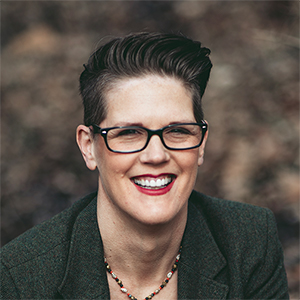
Charlene Pell is the author of the award-winning memoir “In This Altered Body,” with research published in Psychology Today and the Journal of Burn Care & Research.
©2026 Los Angeles Times. Visit at latimes.com. Distributed by Tribune Content Agency, LLC.





































Comments