Killed your sourdough starter? A San Diego scientist made one that lives on the shelf
Published in Business News
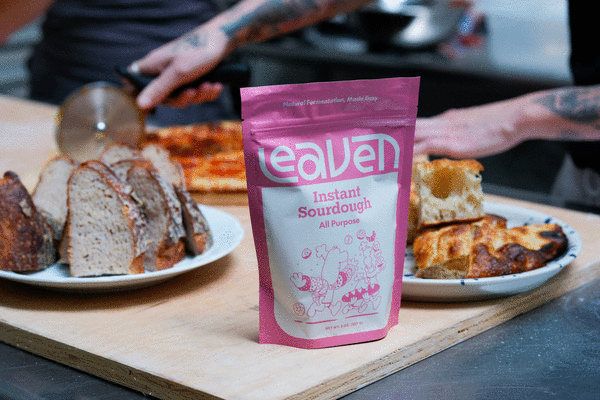
Cameron Martino kept killing his sourdough starter. So the San Diego microbiologist took the problem to his lab.
The result, he says, is the world’s first shelf-stable sourdough starter: a powder of wild yeast and bacteria that bakers can use like a packet of instant yeast, with no feeding required. The starter will give bakers that signature sourdough taste — if they let it ferment a bit longer — but more importantly, Martino said, the dough gets the same healthy community of microbes sought after in sourdough.
Now his company, Leaven Foods, is marketing the instant starter to bakeries and home bakers around the country.
Though the company as only been in stores since March, Leaven Foods has won Time’s Best Invention of 2026 and a Best in Baking award at the 2025 International Baking Industry Exposition.
Sourdough starters are living communities of yeast and bacteria, and they’re famously high-maintenance. If you don’t take good care of them, they won’t survive. A starter kept on the counter needs to be fed once or twice a day. In the fridge it only needs a weekly feeding. If you neglect it, the starter will get sluggish and overly sour, though, the leading cause of death is mold and high heat.
That’s what makes the instant starter so great: no babysitting.
Despite the avalanche of accolades, professional bakers, like Venessa Schoenegge of San Diego’s Urban Farms, were curious: How could a living microbiome survive on the shelf?
Schoenegge’s sourdough starter, which she named Frieda after her great-grandmother, was over 120 years old.
Her sourdough starter was “born” in Prussia during World War I. When her family was fleeing the war, her great-grandmother carried the sourdough starter, “surviving off the bread she made and the milk from cows they caught along the way,” Schoenegge said.
She still has the same jar her great-grandmother carried through Europe.
There is a deep devotion to sourdough starters in the baking community. In Belgium, there is even a sourdough hotel where bakers can leave their starters while on vacation.
Martino recognized the initial reservations and then explained the actual science behind his invention.
He walked past the pizza oven, beakers, and microscopes over to the NASA-grade freeze-drying machine—the crux of the invention.
Martino and his team genetically analyzed every stage of the fermentation process. Once the yeast reached peak activation in the ideal fermentation phase, they freeze-dried the microbiome.
Essentially, the same yeast and bacteria in a normal starter are then freeze-dried to live on the shelf.
“Have you ever had astronaut ice cream?” Martino asked. “It was kind of like that.”
But there was a lot of trial and error to perfect the formula.
Sienna Walters, the in-house baker, tested iteration after iteration. And she wouldn’t just make one loaf — she’d make a baker’s dozen to test if the instant starter could work at scale.
In the lab, Walters mixed the powdered starter with flour, water and eggs. Once wet, the starter came back to life, and four to 12 hours later the dough was ready to bake.
She recommends that bakers use the starter cultures within four months of opening for optimal performance.
“This was a relatively simple problem to solve,” said James Gaffney, Leaven’s head of research and development. Before working at Leaven, he was a scientist at local biotech Native Microbials, studying the microbiome of animals.
Simple as the problem was, the fermented bread promises compounding, far-reaching health benefits.
“It’s hard to find real bread,” said Schoenegge, explaining how back in her home country of Germany, people ate bread for breakfast, lunch and dinner.
Americans think carbs are bad and that they are allergic to gluten, but in reality, she said, Americans aren’t eating real bread.
“Here, loaves are processed with bleach, enriched flour, corn syrup and tons of other sugar and chemicals,” she said.
Although she will stick with Frieda for her own baking, she encourages more people to eat real bread—even if that means using a starter created in a lab.
An easier way to produce real bread will lead to a healthier population, she noted.
Martino has already sold his instant yeast to bakeries in San Diego, though he hasn’t disclosed which ones. The businesses didn’t want to publicly reveal they were using instant yeast.
Some people have reservations about using something developed in a lab, Martino admitted. “But just try it once.”
Leaven can be found at several grocery stores throughout San Diego and surrounding areas, including Lazy Acres Natural Market in Mission Hills and Encinitas, Stump’s Family Marketplace in Ocean Beach, Jensen’s Foods in Point Loma, and Major Market in Escondido. Leaven also sells directly online.
On Amazon, three packets of instant starter sell for $19.99. Each packet typically makes six to eight loaves.
©2026 The San Diego Union-Tribune. Visit sandiegouniontribune.com. Distributed by Tribune Content Agency, LLC.






Comments