Oil jumps as Iran sticks with Hormuz plan Trump rejected
Published in News & Features
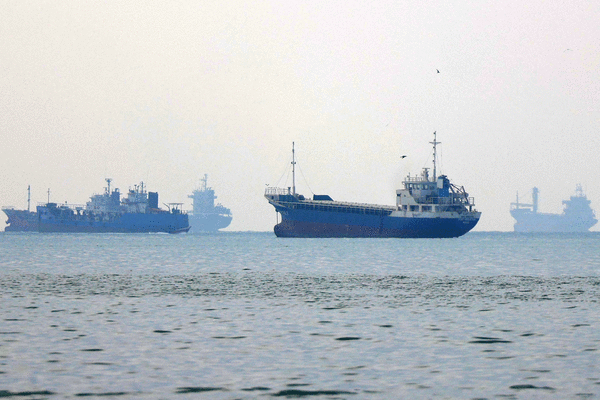
Oil pushed higher as Iran and the U.S. appeared far apart on a new ceasefire deal for the reopening of the Strait of Hormuz, with Tehran saying it’s sticking to a proposal that U.S. President Donald Trump has rejected.
Brent was near $108 a barrel, climbing more than 3%, after discussions between the two sides appeared to hit fresh snags. The conditions Iran wants are something Washington might have agreed to about a year ago but Tehran has now overplayed its hand, Trump told Axios in an interview. Even so, the president expects negotiations to resume this week, according to the report.
Prices pared some gains after Saudi Arabia was said to have started exporting oil using a key cross-country pipeline after the link was repaired following drone strikes earlier this month. Still, key gauges of supply tightness have spiked in recent days, a sign of a clamor for barrels that can be delivered quickly, while fuel prices are surging as global refinery capacity remains hobbled.
Months of stop-start negotiations have yet to solve a conflict that has disrupted Middle East oil flows through the vital strait. Prices swung last week on mixed signals that negotiations might be productive, only for hopes to collapse into more uncertainty — as they have many times before — while the two sides enter an eighth month of war.
Speculators also ramped up bearish wagers at the fastest pace since July last week, positions that could be coming under pressure with Monday’s rally.
“In the absence of a decisive end to the conflict in the Middle East, the balance of risks remains skewed towards higher oil prices,” said Hamad Hussain, senior climate and commodities economist at Capital Economics.
Brent is up over 75% this year and oil products continue to soar even higher. Diesel has also been pushed higher by the Russia-Ukraine war, while uncertainty has continued to mount over U.S. measures to curb record prices for the fuel. Over the weekend, Trump said the White House was looking at curbs on diesel exports “very seriously.”
Meanwhile, the European Union has warned its member states about a potential energy crisis driven by the Middle East conflict, asking them to consider measures to cut demand and fill natural gas storage ahead of winter.
There are also signs that the market for real-world oil barrels is coming increasingly under pressure. Fallout from the Iran war has shrunk the availability of the very large crude tankers used to transport barrels around the world, sending shipping rates to record highs.
Brent’s prompt spread — the difference between its two nearest contracts — has widened to over $7 a barrel, from less than $1 at the end of last month. The bullish pattern, known as backwardation, is a classic indicator of a tight market. In Europe, Dated Brent, a critical physical-market benchmark, has been trading at a wide premium to futures.
On the diplomatic front, the path back to talks remains uncertain. Negotiators were said to have explored a deal to reopen the waterway and for Washington to lift a blockade of Iranian ports. The agreement would have been similar to the memorandum of understanding reached in mid-June, which led to a fragile ceasefire before collapsing.
—With assistance from Kanoko Matsuyama.
©2026 Bloomberg L.P. Visit bloomberg.com. Distributed by Tribune Content Agency, LLC.






Comments