After Machado's return, Rubio warns Venezuela against delaying elections
Published in News & Features
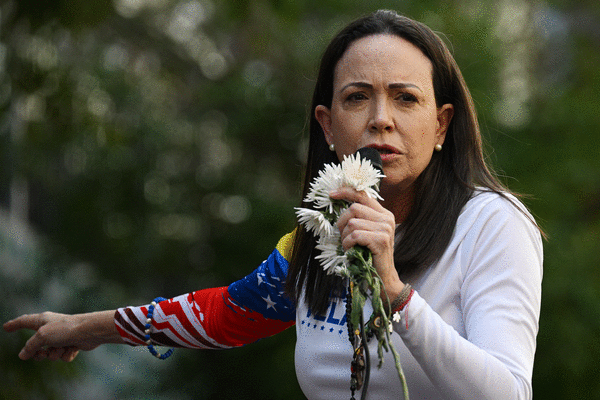
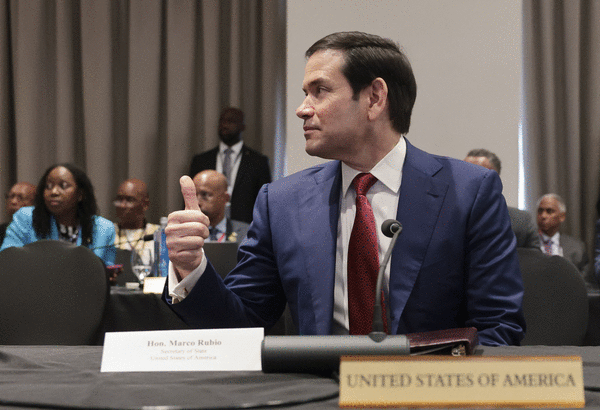
Secretary of State Marco Rubio said Monday that the Trump administration obtained assurances from Venezuela’s interim government weeks before María Corina Machado’s surprise return that the opposition leader could enter the country safely and move freely, providing the clearest account yet of Washington’s role in her homecoming after months of unsuccessful attempts.
During a conference call with journalists, Rubio said U.S. officials told the government of interim President Delcy Rodríguez that Machado, a Venezuelan citizen and the 2025 Nobel Peace Prize laureate, should be allowed to return without interference. Venezuelan authorities responded that she could fly into the country, he said, and Washington passed that message to her representatives.
“Our expectation is that she’s a Venezuelan. She belongs in her country,” Rubio said, recounting what U.S. officials told Venezuelan authorities. “She should be allowed to return, and she should be allowed to return unperturbed, having no problems.”
Those assurances preceded Machado’s dramatic reappearance Sunday at a Catholic church in Lara state and a journey across northern Venezuela that drew thousands of cheering supporters to highways and city streets.
Rubio’s account came as the administration disclosed details of a negotiated plan to replace Venezuela’s highest court and electoral authorities before calling for presidential elections. The proposed reforms depend on cooperation from Rodríguez and other former allies of Nicolás Maduro, whose government spent years suppressing the opposition.
Machado’s return adds a powerful new factor to the negotiations. While she has demonstrated her ability to mobilize large crowds, the timetable for elections remains tied to talks involving Washington, the opposition and the officials who inherited power after Maduro’s capture by U.S. forces in January.
Rubio said he had personally discouraged Machado from returning only once, during the humanitarian emergency following the devastating earthquake that struck Venezuela in June. At the time, he said, the priority was bringing aircraft carrying relief supplies and emergency personnel into the country.
He rejected the suggestion that Washington had been responsible for the other obstacles she encountered, attributing those difficulties to decisions by countries concerned about their relations with Venezuela.
“They told us that she could fly into the airport if she wanted to, and we communicated that to her team,” Rubio said of the interim authorities. “My understanding is ... she entered yesterday and she’s gone through the country and she had no issues and no problems.”
Rubio did not disclose Machado’s route into Venezuela or say whether the United States had provided logistical assistance for her journey.
His explanation followed a Miami Herald investigation documenting at least seven attempts or proposed operations to bring Machado home, involving private aircraft, maritime routes and possible commercial flights. One effort involved a Sept. 22 flight denied permission to land in Curaçao, a decision independently confirmed by the island’s aviation chief.
In a statement posted Sunday on X, Rubio directly linked Machado’s return to the U.S.-supported reconciliation negotiations.
“The conditions allowing for the safe return of Ms. Machado to Venezuela is the direct result of the U.S. supported reconciliation talks which has already seen hundreds of political prisoners freed and hundreds of political opposition figures return from exile,” he wrote. “The United States expects the freedoms of all sectors of Venezuelan politics to continue to be respected. Likewise, we expect all political actors to support these talks, which represent the best chance Venezuela has had in thirty years to peacefully achieve not just a free and fair election but an enduring democracy.”
Path to elections
During the opening portion of Monday’s briefing, conducted on background, a senior State Department official outlined a series of institutional reforms that Washington considers necessary before Venezuela can hold a credible presidential election.
Under an agreement reached during the latest round of U.S.-supported reconciliation talks, representatives of the opposition-linked National Assembly elected in 2015 and the governing United Socialist Party of Venezuela, represented by Jorge Rodríguez, have appointed members to a committee that will evaluate candidates for a new Supreme Tribunal of Justice.
The committee is expected to propose 32 magistrates for approval by the National Assembly, with the goal of installing a new court by mid-December, according to the official.
The next step would be to reform the National Electoral Council and replace its members through a separate selection process involving legal and electoral experts.
Under the proposal, the electoral council would lose its authority to determine which political parties and candidates may participate in elections. It would instead become a technical body responsible for polling stations, voting equipment, counting ballots and reporting results.
The official said both institutions had been used by Maduro’s government to maintain its grip on power, including through judicial decisions against the opposition-controlled legislature and electoral restrictions that prevented Machado from running in the disputed 2024 presidential election.
Washington believes that holding another election under the existing institutions would risk producing another contested outcome, regardless of who won.
Once the new court and electoral council are established, Rodríguez would be expected to declare a permanent vacancy in the presidency, according to the official. That declaration would trigger a six-month period for presidential elections under the constitutional framework described by Washington.
No election date has been announced, and the proposed timetable depends on reforms that have yet to be completed.
The official said the objective was not simply to hold another vote, but to establish institutions capable of producing a result accepted by both winners and losers.
That would also require broader political freedoms, including the ability to form parties, campaign openly, access independent news media and social networks, and travel throughout the country without fear of detention.
The official cited the return of a senior Machado adviser who had previously spent an extended period sheltered in the Argentine Embassy in Caracas as an example of the political opening Washington wants to expand.
But even a freely elected president could face enormous difficulties governing a country where the courts, security forces, legislature and much of the state apparatus were built under nearly three decades of Chavista rule, the official acknowledged.
Economic recovery, the official argued, must accompany political reform to prevent a future democratic government from being overwhelmed by debt, failing infrastructure, shortages, inflation and insecurity.
Rubio warns against delaying transition
Speaking on the record during the question-and-answer portion of the call, Rubio insisted that Washington would not allow the institutional reforms to become an excuse for postponing elections indefinitely.
“We have timelines that are agreed to, and so far they’ve met every one of the timelines,” Rubio said.
He pointed to U.S. sanctions and the licenses permitting Venezuelan economic activity as powerful tools for keeping the interim authorities committed to the process.
“To the extent they’re able to do business and operate today, it is because we are issuing waivers or general licenses that are allowing certain economic activities to happen,” he said. “The United States has significant influence over the direction that these talks go and the results that we get from them.”
Rubio said Washington had made no irreversible concessions and would not allow the interim government to prolong negotiations until the Trump administration left office.
Asked whether he trusts Rodríguez, who has publicly condemned the U.S. military operation that removed Maduro, Rubio said Washington would judge her government by its actions rather than its rhetoric.
He credited the interim authorities with cooperating on U.S. national security priorities, reducing Iranian and Cuban influence, acting against criminal organizations and extraditing individuals wanted by American authorities.
Rubio specifically cited Alex Saab, a former Maduro associate who was extradited to the United States, pleaded guilty and became a cooperating witness.
The secretary also said the interim government had agreed to advance the judicial and electoral reforms.
If Venezuela is able to come up with a new supreme tribunal, an electoral coucil, “a new election, and a new system of government, that’s what we want,” Rubio said. “This is a results-based process.”
Asked whether Rodríguez, her brother Jorge Rodríguez or other officials had been offered immunity from prosecution as an incentive to cooperate, Rubio said there had been no discussions about such guarantees.
He portrayed the negotiations as the most realistic peaceful alternative to renewed authoritarian rule or a potentially violent struggle for power.
“You’re not gonna street protest your way into a democracy,” Rubio said, arguing that Venezuela needed a negotiated process capable of producing lasting institutions. “If anybody tries to derail that process, they’re doing great harm to Venezuela.”
Machado’s return changes equation
Machado’s arrival has introduced a new factor into negotiations that have largely proceeded without her direct participation inside Venezuela.
Her first public appearance Sunday, during Mass in Santa Rosa, was followed by a caravan that traveled from Lara through Yaracuy, Carabobo and Aragua toward Caracas. Thousands of people lined roads and gathered along the route to greet her.
Machado traveled in armored vehicles as supporters waved, ran alongside the procession and shouted messages welcoming her home.
For Antonio De La Cruz, a Washington-based political analyst interviewed by the Miami Herald, the return represents an important political victory but also creates a formidable challenge for Machado.
“The challenge María Corina faces is to transform this mobilization into organization, and organization into institutions,” De La Cruz said.
He contrasted her task with that of Hugo Chávez, who he argued built a political system designed to perpetuate his movement in power.
“María Corina faces the test of building a democracy that can survive any ruler,” he said. “Democratizing the state will be a historic test.”
De La Cruz described Venezuela’s transition as a contest between competing political timetables.
Trump, he said, has prioritized economic stabilization, energy investments and strategic U.S. interests. Rubio has emphasized rebuilding the courts, electoral system and other institutions. Rodríguez, meanwhile, has an incentive to prolong her time in office.
Machado represents another timetable, he argued: that of Venezuelans demanding political change after years of economic hardship and the disputed 2024 election.
Her ability to mobilize the population could force the other participants to give greater weight to public demands for a timely election.
De La Cruz said he believes there had been disagreements within the Trump administration about allowing Machado to return, with some officials concerned that her presence could destabilize a delicate transition.
He based that assessment on information he said he had obtained about internal administration discussions. His account could not be independently confirmed.
In his view, the peaceful crowds that greeted Machado on Sunday undermined arguments that her return would necessarily provoke unrest.
He said Machado’s next tasks would be to mobilize peacefully, organize political parties and civil society, build alliances and advance an agreement for national reconstruction.
Unusual drawing power
Political analyst Rubén Chirinos offered another explanation for the extraordinary public response to Machado’s return.
He compared her political appeal with the charismatic leadership of former President Carlos Andrés Pérez and Chávez, while emphasizing that Machado’s connection with supporters rests on different expectations.
Among them, he said, is the hope of reuniting Venezuelan families separated by years of mass migration.
“Saving the Venezuelan family is something tremendously important,” Chirinos said.
He also pointed to Machado’s persistence through years of political setbacks, restrictions and threats.
“Rocks are broken not by the last blow, but by the sum of all the blows that came before it,” Chirinos said, describing Machado as a symbol of Venezuelans who have refused to abandon hope for political change.
For Chirinos, the enthusiasm surrounding Machado cannot be explained solely through negotiations, international diplomacy or the country’s oil wealth.
“It’s the people who vote, not oil, not the analyses,” he said. “It’s the people who validate.”
Allies seek role
Claudia Macero, a spokeswoman and close adviser to Machado, said Monday that the opposition leader intends to listen to proposals from different sectors of Venezuelan society and incorporate them into discussions over the transition.
In an interview on the Éxitos radio network, Macero said Machado’s team had been receiving proposals from the opposition’s Unitary Platform and other organizations for a broad national agreement.
“If there is something people may be missing, it is being part of this process of change,” Macero said.
She argued that ordinary Venezuelans need representation in negotiations dominated by political leaders and international players.
Macero also said Machado is willing to meet with Rodríguez or anyone else necessary to advance an agreement, provided the discussions took place openly and followed a defined agenda.
Her comments suggest that Machado intends to use the political strength demonstrated by Sunday’s crowds to influence the transition without necessarily rejecting the U.S.-supported negotiations.
Macero said Machado would begin traveling throughout Venezuela and expressed the expectation that a presidential election would be called next year.
The governing party, meanwhile, sought to minimize the significance of Machado’s return.
Diosdado Cabello, the powerful interior minister and secretary-general of the ruling socialist party, asserted Monday that no one faces political persecution in Venezuela.
“Whoever wants to come back should come back,” Cabello said during a party news conference broadcast on state television. “There is no persecution of anyone here.”
His remarks contrasted with the record of arrests, prosecutions and restrictions against opposition figures following the disputed July 2024 election, when authorities declared Maduro the winner without releasing detailed results.
The opposition maintained that voting records it collected demonstrated that Edmundo González Urrutia, who replaced Machado on the ballot after she was barred from running, had won by a wide margin.
_____
©2026 Miami Herald. Visit miamiherald.com. Distributed by Tribune Content Agency, LLC.





Comments