Minnesota AG Keith Ellison alleges businesses stole millions meant to feed children
Published in News & Features
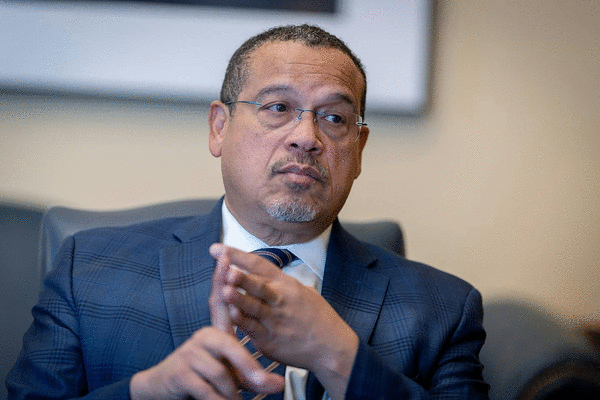
MINNEAPOLIS — Minnesota Attorney General Keith Ellison is suing two businesses and related individuals, claiming they defrauded the state out of millions of dollars in federal child nutrition funds during the COVID-19 pandemic.
Ellison filed two civil lawsuits. One of the suits filed Monday in Hennepin County District Court names Nasib Bakery Food Distribution, LLC and its former owner Abshir Hossen as the defendants. The other names the East African Health Network and its founder Abdinasir Elmi and affiliated entities and individuals as defendants. None of the defendants in the lawsuits have been criminally charged in federal court.
In both suits, Ellison says the defendants violated the Minnesota False Claims Act.
Ellison’s action comes just a week before the Nov. 3 election, in which fraud has become a central issue, especially in the race for the attorney general’s office.
Ellison, a Democrat, is locked in a tight battle with Republican challenger Ron Schutz, who in an MPR debate on Oct. 2 said Ellison had not done a good job combating fraud. Schutz said he “would allocate more resources to fighting fraud.”
Schutz has been running TV ads attacking Ellison’s record on fraud, and in the MPR debate called Minnesota the “Land of 10,000 frauds,” with a nod to the $250 million Feeding Our Future fraud case that unfolded while Ellison was in office.
Ellison has vigorously defended his record in fighting fraud, citing the more than 350 Medicaid fraud convictions his office has won since 2019.
Minnesota has had a Democratic attorney general since 1971.
“People and organizations that steal from government programs that are supposed to support children and vulnerable folks in our community infuriate all Minnesotans and me, and erode public trust,” Ellison said in filing the suits. “The lawsuits we’ve filed today are the latest in our work to use our civil Minnesota False Claims Act authority to hold accountable the businesses and individuals that shamelessly exploited government food programs intended to feed Minnesota’s children.”
Federal nutrition programs are funded by the U.S. Department of Agriculture. In Minnesota, the state’s Department of Education manages and oversees the allocation of the federal dollars.
In the suit against Nasib Bakery in Minneapolis, Ellison says the defendant served as the vendor for a site called “Riverside Park” as part of the Summer Food Service Program. From October 2020 to April 2021, Nasib Bakery said it served more than 860,000 breakfasts and lunches in the six-month period and claimed more than $2 million in reimbursements.
According to the lawsuit, records show Nasib Bakery and Hossin spent only a fraction of the money on food supplies. Instead, more than $1.1 million went into Hossin’s bank account and was used to pay off his mortgage, buy properties and invest in other companies, according to the lawsuit.
The 26-page complaint alleges Hossin violated the state’s False Claims Act by turning in false claims to the Minnesota Department of Education (MDE) and falsifying records to support the claims.
A second 66-page suit alleges that four companies and six individuals connected to a non-profit corporation called the East African Health Network (EAHN) worked together and claimed to have served more than 3 million meals from 2020 to 2022. They received more than $10 million in reimbursements from MDE, according to the suit.
In the complaint, Ellison accuses EAHN and its founder, Elmi, of working with several vendors to run over a dozen feeding sites. Some of those sites were sponsored by EAHN and others by a group called Partners in Nutrition (PIN).
Ellison’s investigation found that EAHN, Elmi and others “personally profited from providing federally funded meals in violation of program restrictions,” and that meal documentation contains “numerous indicators of fraud and does not support the number of meals they claimed to serve,” according to the complaint.
In September, the attorney general announced a proposed settlement after suing PIN, which, as sponsor for both defendants, submitted claims on behalf of Nasib Bakery and the EAHN. In that lawsuit, Ellison said PIN took advantage of its role as a food program sponsor by “knowingly” submitting false claims to MDE for meals that were not served and for facilitating fraud in the food distributions it claimed to be monitoring.
The amount steered to fraudsters was believed to be as high as $100 million.
The settlement allows the state to recoup more than $18.5 million in taxpayer money and calls for PIN to dissolve. A hearing on the matter is set for Dec. 15.
The lawsuits filed Monday seek monetary damages, civil penalties, injunctive relief and to cover the attorney general’s office’s fees and costs to conduct the investigation.
If the attorney general’s office is successful in both lawsuits and is able to collect all $12 million in allegedly fraudulent proceeds, state officials will have recouped a total of $30 million from fraudsters through litigation this year.
By comparison, federal officials have seized $60 million to $70 million through more than 80 criminal cases handled by prosecutors since 2022, according to a spokesman for the U.S. Attorney’s Office in Minnesota. Federal prosecutors also have obtained more than $150 million in forfeiture judgments against the defendants, but it’s hard to tell how much the government will actually be able to collect. The seized property will be used to help pay down those totals.
_____
(Jeffrey Meitrodt of the Minnesota Star Tribune contributed to this story.)
_____
©2026 The Minnesota Star Tribune. Visit startribune.com. Distributed by Tribune Content Agency, LLC



Comments