Great America, the Bay Area's premier theme park, is closing for good. Here's when
Published in News & Features
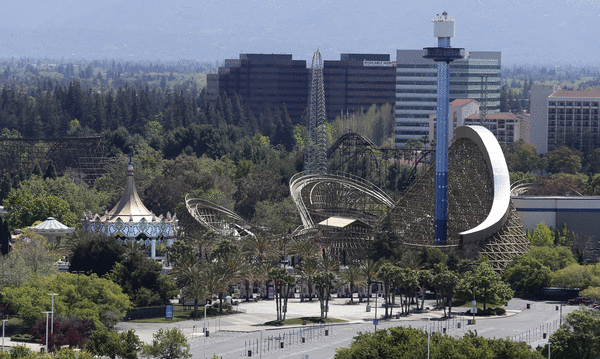
SAN FRANCISCO — Great America, the beloved hometown theme park for generations of Northern Californians, has announced there will be one more season of roller coasters and funnel cakes before the gates close for good.
The Santa Clara theme park's final day of operation will be next Labor Day, ending a 51-year run as an attraction once seen as Northern California's version of Disneyland — and a rite of passage for local teenagers.
The closure has long been expected, ever since Cedar Fair sold the park's 112-acre footprint to San Francisco logistics real estate company Prologis in 2022 for $310 million — a considerable gain from when the former owner purchased the land from the city's redevelopment agency for $150 million three years earlier.
The new owner continued leasing the land under the park to Great America, with the term ending in mid-2028 and an option to extend through mid-2033. But with Great America's latest corporate owner, Six Flags, struggling financially after its merger with Cedar Fair, there have been clear signs that the park probably was going to close sooner rather than later.
Last year, Great America canceled most live entertainment and its seasonal Halloween- and Christmas-themed events. The park's vice president and general manager, Barbara-Lea Granter, also left the company as Six Flags moved to a regional operating structure centralizing certain responsibilities at the corporate level. Six Flags closed its theme park near Washington, D.C., and named a new chief executive. The company sold seven more parks this year.
Great America originally was opened in 1976 by the Marriott Corp. and considered a jewel in the string of theme parks built as smaller, regional venues to give people more convenient — and less expensive — places to visit. The Great America branding was a nod to its opening during the nation's bicentennial, with themed lands recalling periods of American history, including Orleans Place and 1920s-era Hometown Square.
At its entrance is Carousel Columbia — a rare double-decker attraction, reputedly the tallest in the world, that is also notable for having an array of animals besides horses to ride on, including pigs and rabbits. Amusement Today ranks the park's Gold Striker among the top 20 wooden roller coasters in the world.
But the theme park had a history of failing to meet financial expectations, a reason why Marriott soon opted to sell. News reports at the time said Marriott had hoped the park would attract 3.5 million visitors a year, but actual attendance was only 2 million.
The city of Santa Clara bought the park through its redevelopment agency and later sold the assets to Kings Entertainment Co. The assets were sold again to Paramount Communications in 1992, then to Cedar Fair in 2006.
The city's redevelopment agency kept the land on which the park sat until 2019, when it was forced to sell after the state abolished redevelopment agencies, and the city was not in a financial position to outbid Cedar Fair for the land.
Great America's sister park near Chicago — Six Flags Great America — remains open.
The announcement of Great America's closure follows recent headlines regarding ride safety concerns at other Six Flags parks.
Last month, a 42-year-old man fell to his death at Six Flags Over Georgia after being ejected from a roller coaster. Six Flags temporarily closed several attractions across the U.S. and Canada "out of an abundance of caution," including the Goliath roller coaster at Magic Mountain in Valencia.
In September, Magic Mountain announced its famous X2 coaster would permanently close following a history of injuries, including some that led to deaths.
"We have launched a comprehensive review of ride safety across our entire portfolio, supported by independent third-party engineering and inspection specialists," the president and chief executive of Six Flags, John Reilly, said in a statement Thursday.
©2026 Los Angeles Times. Visit latimes.com. Distributed by Tribune Content Agency, LLC.




Comments