They were serving life sentences for Colorado murders. Clemency allowed them to build meaningful lives on the outside
Published in News & Features
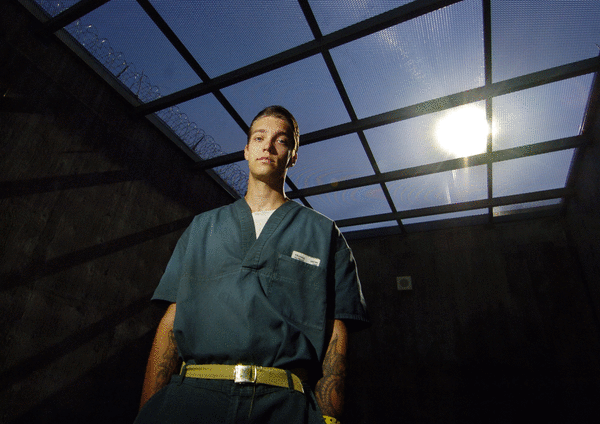



DENVER -- When Nathan Ybanez left prison after more than two decades behind bars, he was so accustomed to the flat, smooth prison floors that he found it difficult to walk on anything else.
Glass, too, was problematic. Nothing in prison is made of glass, and after years of plastic cups, he had to be careful not to use too much force when setting down a drinking glass after a sip.
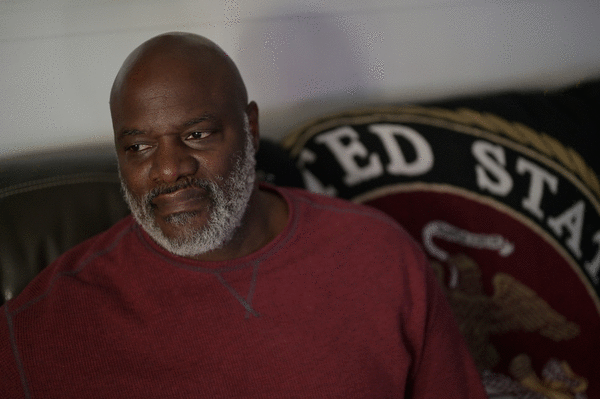
For Bruce Mingo, driving was a challenge after his decades-long imprisonment. It wasn’t so much the mechanics of turning and accelerating as it was the other drivers, their impatience and disrespect. And then there was technology, leaving a world of pagers and returning to smartphones, coming back to a Denver where whole neighborhoods had been transformed, said Brian Lee, who was incarcerated for 26 years.
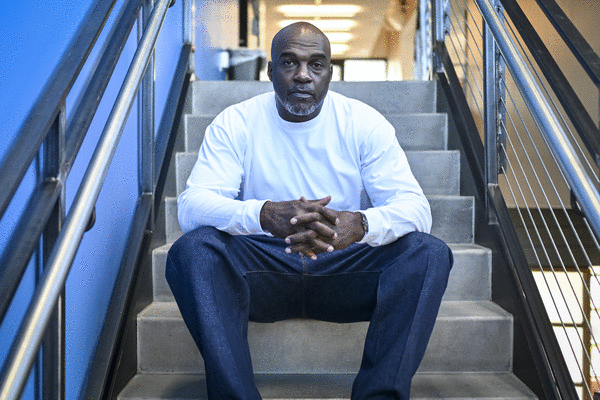
Yet the shock of high prices, the difficulty finding a job as a convicted felon — it all pales when weighed against freedom, said Dwight Anderson, who left prison in August after serving more than 30 years for a 1995 murder.
“Life is what you make it,” he said. “I could be crying about this and that, but at the same time, I’m free.”
The four former prisoners are among a dozen men convicted of murder in the 1980s and ’90s who were serving life prison sentences without the possibility of parole until December 2018, when then-Gov. John Hickenlooper, in a flurry of clemency and pardons near the end of his second term, opened up a path for the cohort to be freed over the coming years. Hickenlooper noted in several clemency letters that the men had taken accountability for their crimes, matured in prison and shown years of good behavior.
As Gov. Jared Polis now approaches that same milestone in his own governorship — Polis pardoned 27 people Thursday — The Denver Post caught up with those men who’d been sentenced to die in prison but are now back in society. In interviews with The Post, seven of the released men reflected on prison, life since they gained freedom and the clemency process.
“Every now and then we’ll stop in our tracks, like, ‘How blessed are we to make a home-cooked meal together?'” Ybanez, 45, said of himself and his wife. “How blessed am I that I can just drive down the street, whenever I want?”
Of the 12 people Hickenlooper granted clemency for murder in December 2018, nine have been freed, one man is in a halfway house and two remain in prison. Those freed walked out at various points between 2019 and August as they became eligible for parole on dates picked by Hickenlooper. None have been re-arrested, court records show, and some have formed deep bonds with each other, ties that have endured beyond the prison walls.
“We got a brotherhood that is indescribable,” Mingo, 48, said of some of the 2018 clemency cohort. Convicted of murder in 1999 in the beating death of an immigrant, Mingo now works at nonprofit Life-Line Colorado, where he helps people coming out of prison adjust back into society.
Brian Lee, his brother William Lee and their childhood friend Eric Lightner — who were all convicted of a fatal 1992 shooting — grew up together and served nearly three decades together in prison. They got the news about clemency together, too, with Brian going into an office first while his brother and Lightner waited nervously outside.
Brian remembers a woman from Hickenlooper’s administration saying the governor had granted him clemency. The rest of her speech sounded like gibberish to him. On the way out, he passed William Lee and Lightner, sitting stiff as boards, and flashed a thumbs up.
Days later, when their news finally flashed across a prison TV, the whole pod erupted in celebration, Brian Lee said.
Released in 2022, the 56-year-old now works as a truck driver. He’s focused on building up his savings and spending time with his grandchildren. He remains close with Lightner and others who received clemency, and they sometimes get together for a dinner or event.
Lightner, 56, who has reconnected with his high school sweetheart since his release, sometimes can’t make it.
“I hung out with them for 30 years; I don’t want to hang out with them anymore,” he said with a laugh. He’s traveled since his release, visiting major cities across the country. He works at Second Chance Center, an Aurora nonprofit focused on supporting former prisoners.
He, like others in the group, sometimes writes letters of recommendation and support for people who are still in prison and are seeking clemency. All said they do so judiciously, and only when they feel the prisoner seeking release has truly earned it.
“You have a lot of guys who try to do the right thing like it is some kind of gimmick,” said Dave Coleman, who was convicted in 1987 of killing a man in an attempted robbery while he was addicted to drugs. “But if you don’t do it right, it ain’t sustainable. So many guys get out and go right back. And you wonder why. A lot of it is because that inner change, they haven’t really dealt with a lot of those issues.”
Coleman spent 20 years in prison before he took a serious look at himself and decided to change who he was, he said. It was after that intense internal shift that doors started to open for him, he said. He was released in 2021 and now works as an addiction counselor. Freedom didn’t change him, he said.
“I made the transformation already,” he said. “I had found my freedom even though I was behind prison walls.”
Others who received clemency in 2018 haven’t stayed connected to each other. Curtis Brooks, who was freed in 2019 after he was sentenced to life for his role in a 1995 killing when he was 15, first moved to Maryland and then to upstate New York. The 47-year-old lives there with his wife, working a 9-to-5 job doing data entry for the state, he said.
He doesn’t stay in touch with anyone he knew in prison, he said.
“The way I look at it is the only thing we really have in common is the worst experience I’ve ever had in my life, so that is not something I want to keep delving into,” Brooks said. “It’s not a thing for war stories or reflecting; that was a lesson I had to learn in my life. I carry those lessons, the weight of it, with me every day.”
He sees prison guards as the best resource for state officials who are trying to suss out whether a clemency applicant has genuinely changed or is just checking boxes to look good on paper.
“They are the people who sit back and see these guys each and every day,” he said. “They see how they move around, who they hang out with. And maybe they don’t see everything, but they can give you more of a feel of who these individuals are.”
Ybanez, too, has distanced himself from others in the 2018 clemency cohort, though he keeps up with people on social media. He finds that prisoners who made a single, serious mistake are the least likely to reoffend if released, while those who commit numerous minor crimes, perhaps motivated by drug addiction, often end up back in prison.
Convicted in 1999 of killing his mother as a 16-year-old, Ybanez now works as a paralegal, running a firm with his wife in Colorado Springs. He was released on parole in December 2020, after roughly 22 years in prison, and came out to a world of social distancing and masks. He needed a solid two years to settle back into life, to figure out who he was without the context of incarceration, he said.
He still thinks about prison. Not every day, but often.
“I think about people on the inside, sometimes, that I feel like they really deserve a second chance,” he said. “It is kind of random, almost, who gets given a second chance and who doesn’t. …Why did I have a second chance and some of the people I know, who would be doing just as well as me right now, were not given a second chance? I think about those folks and hope one day some of them might have the same opportunities I have.”
©2026 MediaNews Group, Inc. Visit at denverpost.com. Distributed by Tribune Content Agency, LLC.





Comments