Colorado lawmakers grapple with ideas to change Medicaid, without relying too heavily on Amendment 87
Published in News & Features
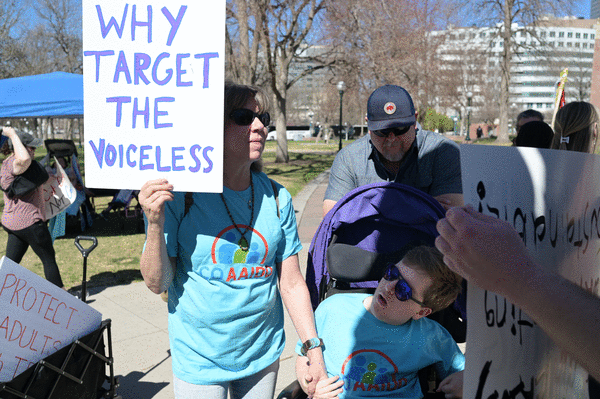
DENVER — Colorado lawmakers have approved dozens of recommendations to retool the state’s costly Medicaid program, while reaffirming that the passage of a revenue-raising ballot measure will not save lawmakers from a serious — and, at times, agonizing — examination of the public health service.
The roughly 60 recommendations approved by the legislature’s Medicaid Commission this month cover a sweep of Medicaid administrative functions and direct-care services. They range from pharmacy benefits and fiscal oversight to “right-sizing” the troubled Behavioral Health Administration.
What impact they may have, though, is uncertain. The proposals are detailed but high-level ideas for how to shore up a program that both provides critical healthcare to nearly 20% of Coloradans and has run into repeated $1 billion financial holes. To the recurring frustration of the commission’s members, it’s also unclear how much the recommendations could save the state because of a lack of information from Medicaid officials.
But amid mounting concern about the long-term stability of Medicaid, the commission’s work provides a tangible sense of how lawmakers — and the incoming administration of Gov.-elect Phil Weiser — could seek to change the program.
Several of the commission’s members serve on the Joint Budget Committee, which is tasked with writing the state budget each year and holds significant sway over Medicaid. Others are senior Republican and Democrat lawmakers.
The commission’s work also shows that policymakers still intend to cut and alter Medicaid, despite the passage of Amendment 87. The measure, which institutes higher income tax rates for the state’s wealthiest individuals and businesses while slightly reducing rates for most taxpayers, will inject billions of dollars of new revenue into state coffers in the coming years. It could, theoretically, cover Medicaid’s overages in the short term.
Senior state leaders, from outgoing Gov. Jared Polis to the lawmakers on the budget committee, have warned against that idea. Summer Gathercole, the consultant who guided the commission’s work, warned the group on Nov. 10 that Amendment 87 “is not going to be our savior.”
“The projected overage for Medicaid for this fiscal year is $1 billion,” state Rep. Kyle Brown, a Louisville Democrat, said at that meeting. “(Amendment) 87 is expected to raise $1 billion in its first year and $2 billion in its second. If (Medicaid) continues to grow at 15% a year, we will eat up all of that money unless we make changes, and (Medicaid) will eat it up very quickly, probably within about two years.”
In other words, lawmakers will still have to make agonizing decisions about Medicaid programs, which account for a significant part of the budget, in 2027. The Department of Health Care Policy and Financing, or HCPF — which oversees Medicaid — has a $20.5 billion total budget this year, with about $6 billion coming from the state’s general fund.
Brown and others said they had cried during similar discussions about Medicaid in the most recent legislative session. But those upcoming decisions likely won’t include the $600 million in cuts suggested by Polis earlier this month.
“That would be pretty devastating, not just to people who are on Medicaid but to the entire healthcare space,” Sen. Judy Amabile, the commission’s chairwoman, said in an interview Monday. “(87) just gives us a little more time to roll out the cuts. We have to take cuts this year, and we’ll have to take cuts next year, but we don’t have to maybe do it all in one year.
“We just have to be on a path to getting it done. That’s why this Medicaid commission mattered — because we’re saying, ‘Find the way,’ and then we can roll that out over time, so we’re not just pulling the rug out from under people.”
Amabile stressed that the commission wasn’t tasked with finding cuts but with providing options to shore up the future of Medicaid. To that end, the commission voted on nearly 130 recommendations. Roughly 60 were accepted, while nearly as many were rejected. Others were tabled or combined into other items.
The commission recommended closer scrutiny of new benefits added to the Medicaid program in recent years and a study of how Colorado’s benefits compare to the rest of the country. Its members rejected a proposal to further limit how much can be paid to caregivers of people with disabilities.
Several of the suggestions considered by the committee will likely be turned into specific bills, Amabile said, including one of her own to “right-size” the Behavioral Health Administration by focusing it more intently on higher-need patients.
The commission repeatedly discussed measures intended to ensure the state’s public healthcare system was accountable, both for the care it provides and the dollars it spends. One proposal the group adopted seeks to strengthen the ombudsman position in the BHA.
The commission also suggested additional studies and investigation of several ideas, to the frustration of some members.
The cause of that vexation was the near-total lack of information about how much — or even if — any of the recommendations could save the state any money, should they be adopted by the legislature later on. During its meetings earlier this month, the members vented that HCPF couldn’t give them the information and data they needed to gauge the financial impact of their work.
Rep. Rick Taggart, a Grand Junction Republican, said the state wouldn’t need to study or investigate so many of the commission’s proposals if the agency had provided more information. Sen. Jeff Bridges, a Greenwood Village Democrat who will soon become the state’s treasurer, said in the Nov. 10 meeting that he had “no idea” whether the proposals would cut too much or not enough.
“None of us know what’s gone on inside the department,” added Sen.-elect Emily Sirota, a Denver Democrat who is moving over from the House. “… This has been an ongoing theme, a lack of data, and one thing the commission can do as we enter a new administration is determine: Why do we not have the data? Is it that they don’t have it? Were they not sharing it?”
There was broad consensus that the agency needs to “clean house,” Amabile said. That’s not new: Earlier this year, lawmakers — exasperated with repeated instances of mismanagement and misspending within the department — prepared a vote of no confidence in its longtime executive director, Kim Bimestefer. She resigned before the vote was held.
“It seems inefficient in the way that it is structured now,” Amabile said Monday. “Their (workforce count) has grown enormously. The costs have grown enormously. But there aren’t more people on Medicaid. So this administrative thing seems like we could be doing it better. Does that solve the problem? No. … But there is some money to be saved in making sure it’s structured in a way that’s efficient.”
--------------
©2026 MediaNews Group, Inc. Visit at denverpost.com. Distributed by Tribune Content Agency, LLC.






Comments