When Pets Decide the Rules of the House
Published in Cats & Dogs News
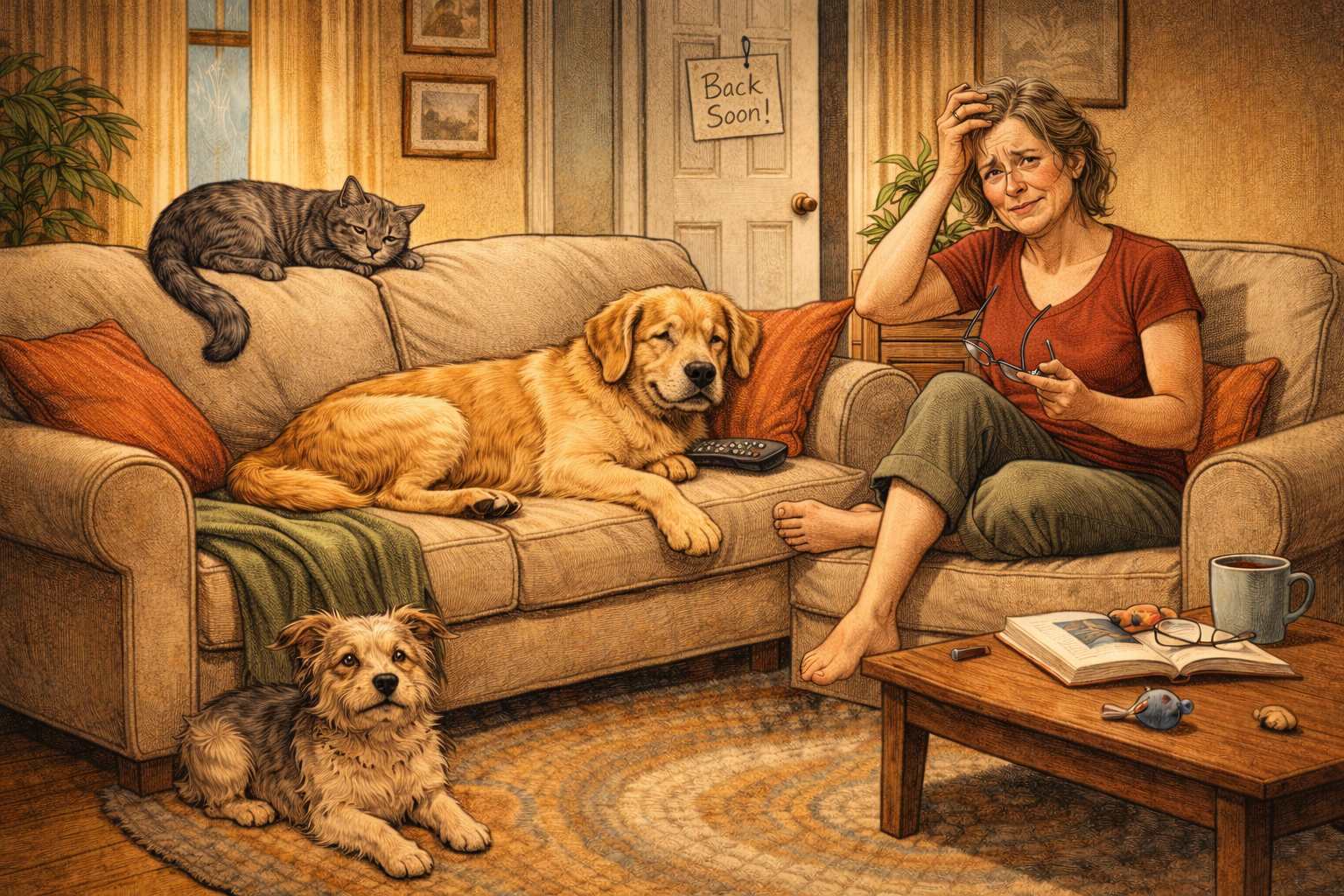
In most households, rules are assumed to be written by the people who pay the rent or the mortgage. Chairs have purposes. Beds have boundaries. Doors are either open or closed. But anyone who has lived with a pet long enough knows that these rules are provisional. Quietly, persistently, animals renegotiate them.
The process is rarely confrontational. There are no ultimatums. Instead, pets shape domestic life through repetition, patience, and an unerring sense of leverage. Over time, the house adjusts.
The First Small Concessions
Rule changes usually begin modestly. A dog is allowed on the couch “just this once.” A cat sleeps at the foot of the bed during a cold night. A bird’s cage is left open a little longer than usual.
These moments are framed as exceptions, but animals are attentive to patterns, not explanations. When an action produces comfort or access, it is repeated. When repetition meets human reluctance, the negotiation begins.
Behavioral scientists note that animals excel at reinforcement. A behavior that works is rewarded, whether with warmth, proximity, or attention. Humans, for their part, are often inconsistent enforcers. This imbalance favors the pet.
Furniture as Territory
Few household rules are more quietly overturned than those involving furniture. Sofas, chairs, and beds are valuable resources: elevated, padded, and central to human activity. Pets gravitate toward them instinctively.
Once an animal claims a preferred spot, humans adapt. People sit differently, perch on armrests, or choose alternate chairs rather than disturb a sleeping pet. The furniture’s function subtly shifts. It becomes shared territory, then de facto pet property.
Over time, the justification changes. What begins as indulgence becomes routine, and routine becomes expectation. The idea that the couch was ever “off limits” starts to feel quaint.
Schedules Rewritten
Pets are also adept at reshaping time. Feeding hours, wake-up routines, and bedtime rituals often bend to animal preferences.
Cats learn which behaviors prompt a human to rise earlier than planned. Dogs anticipate walks with uncanny precision and make their expectations known. Even pets that do not vocalize communicate through pacing, staring, or positioning themselves strategically.
Humans respond not because the behavior is disruptive, but because it is predictable. It becomes easier to comply than to resist. The household schedule gradually aligns with the animal’s internal clock.
Doors, Thresholds, and Control
Few things reveal shifting household authority like doors. Pets quickly learn which doors separate them from what they want—people, warmth, food, or novelty.
A door that was once kept closed begins to stay ajar. A room becomes accessible because denying access requires effort. Eventually, the default changes. Humans begin opening doors preemptively, anticipating the pet’s needs.
The door still exists, but its meaning has changed. It is no longer a barrier; it is a suggestion.
The Power of Presence
Animals do not need to assert dominance to change rules. Often, their most effective tool is simple presence.
A dog that positions itself directly in a walkway forces humans to navigate around it. A cat that occupies the center of a bed requires sleepers to adjust their posture. Over time, humans learn to move in ways that accommodate the animal, often without conscious thought.
This adjustment becomes embodied. People step differently, sleep differently, and arrange their spaces differently, all in response to a nonverbal occupant who never asked explicitly.
Why Humans Give In
The willingness to adapt is not weakness; it is relational. Pets occupy a unique emotional category. They are dependent yet autonomous, expressive yet wordless. Humans interpret their needs through behavior rather than language, which makes accommodation feel intuitive rather than negotiated.
There is also an asymmetry of stakes. For a human, enforcing a rule may mean brief inconvenience. For a pet, access to warmth, security, or companionship may feel essential. Humans, sensing this imbalance, often choose flexibility.
Over time, the rules that remain are the ones that truly matter. Everything else becomes negotiable.
When the House Feels “Right”
Eventually, the transformed household feels natural. The chair by the window is understood to be the cat’s. The rug by the door belongs to the dog. Walkways, schedules, and routines settle into a new equilibrium.
At this stage, humans often forget the original rules entirely. The house no longer feels altered; it feels complete. Visitors may be surprised by the arrangements, but residents move through them effortlessly.
The animal’s influence is no longer visible because it has been fully absorbed.
What Pets Teach About Living Together
The way pets reshape households offers a quiet lesson in coexistence. Rules are not always imposed; they can emerge. Authority does not always announce itself; it can be established through consistency and need.
In adapting to animals, humans practice a form of attentiveness that is increasingly rare: responding to another being without demanding verbal justification. The house becomes not just a shelter, but a negotiated space.
And in that negotiation, pets often prove remarkably effective lawmakers.
========
Jonah Whitaker writes about animals, domestic life, and the small negotiations that shape everyday living. He focuses on how shared spaces evolve through habit, attachment, and quiet compromise. This article was written, in part, utilizing AI tools.






Comments