5 takeaways from candidate forum for Tampa Bay congressional seat
Published in Political News

TAMPA, Fla. — It wasn’t technically a debate, but the candidates vying for Tampa Bay’s Congressional District 16 took shots at each other all the same in a virtual forum this week.
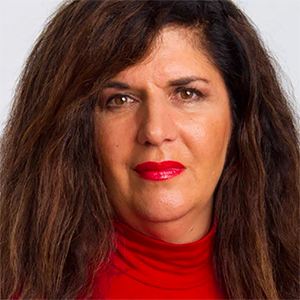
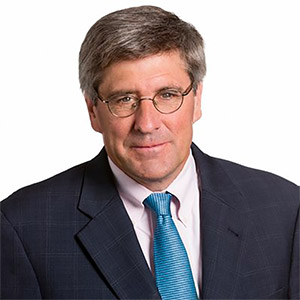
Republican Sydney Gruters and Democrat Kelly Kirschner, as well as Mark Davis, who’s not affiliated with any political party, answered a range of questions from longtime broadcast journalist and moderator Trevor Pettiford. Newly redrawn District 16 includes parts of seven counties, stretching from St. Petersburg to Arcadia in rural DeSoto County.
The forum, which was put on by the League of Women Voters of Manatee County, was the only scheduled event with all the candidates as of late September — so it may have been voters’ only opportunity to see them speak head-to-head.
Here are five takeaways from the Congressional District 16 candidate forum.
1. Gruters, Kirschner have the same top priorities.
Policy differences are to be expected between Gruters and Kirschner, who come from opposite sides of the aisle. But just as striking were the similarities in some of their messaging.
Both candidates have the same top two priorities: tackling affordability and corruption.
Kirschner accused Gruters of copying his campaign strategy.
“I’m really humbled and honored that we have a Republican candidate that has co-opted our same platform,” he said.
Kirschner, the former mayor of Sarasota, said both issues have the same root cause because corrupt decisions by politicians lead to higher costs for regular Floridians. He referenced Gruters’ former work with the New College of Florida, saying that the state’s takeover of the Sarasota school has led to soaring taxpayer costs while its academic rankings have fallen. (Gruters led the New College Foundation, which raises private money for the school.)
“When we talk, again, about the nexus of corruption and costs that we pay, it is emblematic here, live and in person on Zoom, with one of the candidates that’s here,” Kirschner said.
Gruters didn’t respond directly. But she repeatedly pointed to her resume as a longtime congressional staffer and state director for the U.S. Department of Agriculture, saying she understands bureaucracy and how to improve it.
“The federal government ... makes everything 1,000 times harder than it needs to be,” she said during a discussion on increasing broadband access. “We need to help (constituents), walk alongside them and fight for them.”
2. Data centers, Flock cameras still big issues.
The candidates often referenced Big Tech throughout the event, making clear how much they believe the issue matters to voters.
Two large-scale data centers have been proposed within rural parts of the congressional district, in Fort Meade and Arcadia. Both have been met with fierce opposition from local residents.
Gruters said no costs from data centers should bleed down to Floridians.
“Big Tech should pay their own way,” she said. “This should not be put on the consumers, under any circumstances.”
Gruters also said Flock cameras are a “very serious concern,” and leaders need to ensure “our civil liberties are not being compromised.”
Police use the AI-powered roadside cameras to solve crimes, but the technology has come under scrutiny because of its potential for misuse.
Kirschner echoed similar points, but criticized Congress for years of inaction.
The solution is “empowering communities, it is stopping the surveillance state, it is actually having a Congress that begins to act,” he said. “These (artificial intelligence) companies need to be held liable.”
3. Divisions on immigration, disaster relief, Social Security.
There was much more daylight between the candidates’ stances on other issues.
On immigration, Kirschner said Immigration and Customs Enforcement raids around the country were “political theater” that’s “doing nothing.” He called for bipartisan, comprehensive reform.
Gruters said former President Joe Biden allowed millions of immigrants to enter illegally, many of whom she alleged were “violent criminals, murderers.”
“We need to do everything we can to focus on making this process easier for those who are trying to come here legally,” she said. “We don’t need more laws in place. The laws are there.”
When it came to disaster relief, Gruters floated an idea that would dramatically alter how Floridians recover from hurricanes: Changing the “50% rule.”
That federal rule, which requires homes that are deemed more than 50% damaged to be brought up to current hurricane standards, is designed to ensure that taxpayers don’t have to pay to rebuild overly vulnerable properties again and again. But in Tampa Bay, the rule also mired some 2024 storm victims in seemingly endless bureaucracy or forced them to pay for expensive upgrades.
“We have to seriously look at waiving that,” Gruters said of the rule. “You’re forcing seniors out of their homes. It’s major overreach.”
Asked how they protect Social Security from looming insolvency, Gruters said she would “never support raising taxes.”
Kirschner accused her of “cognitive dissonance” and said Congress needs to “scrap the cap.”
That refers to the Social Security payroll tax cap, which imposes Social Security taxes on the first $184,500 a person earns. Getting rid of the cap would cause higher earners to pay more.
4. Candidates attacked on finances, campaign donors.
The sharpest barbs of the forum came when Gruters and Kirschner referenced each other’s financial paperwork.
Kirschner dug into Gruters’ campaign donors, mentioning electric utilities like Duke Energy and data center company executives. Gruters’ financial disclosure also shows that her husband, Republican National Committee leader Joe Gruters, owns a stake in a company called One Nuclear Energy that markets itself as a power source for data centers.
In response, Gruters pointed to Kirschner’s financial disclosure, which shows he owns stock in tech giants like Meta, Nvidia and Google’s parent company, Alphabet Inc.
“He may be against AI and against data centers, but yet (he is) personally profiting from them. This is just another example of why people are fed up with Congress,” Gruters said. “I am committed to banning stock trading for this very purpose.”
Kirschner said there was nothing unusual about his investments.
“If you’ve followed the market at all, and you’re a responsible parent and we might want to retire at some point, you’re probably going to invest in things where you think might have growth,” he said.
5. One candidate used tech glitches to advantage.
Davis, the independent, largely ran to the left of both major-party candidates, calling for universal healthcare and abolishing ICE.
He also had internet connectivity issues that regularly bumped him out of the virtual forum.
At one point, Davis parlayed that into a zinger about how Kirschner lives outside the district in Sarasota, noting that the district has longtime issues with insufficient broadband.
“I think this proves that I actually live in our district because I cannot keep our internet connection,” he said.
©2026 Tampa Bay Times. Visit tampabay.com. Distributed by Tribune Content Agency, LLC.









Comments