Delta CEO says ground stop costs millions, shows need for air updates
Published in Business News
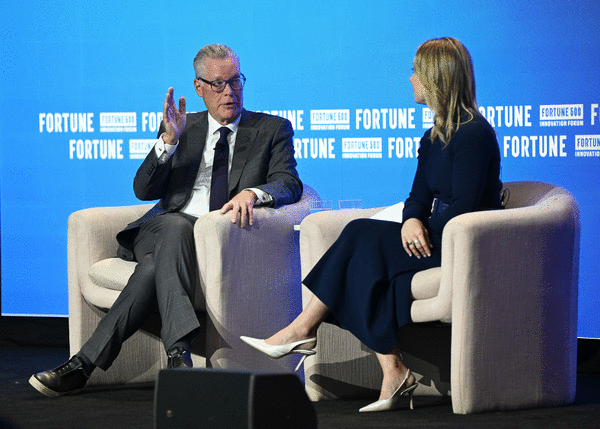
DETROIT — Delta Air Lines CEO Ed Bastian said the nationwide ground stop of flights on Friday, Nov. 13, that cost the industry "millions" shouldn't create a loss of confidence in the national air system, but he called for investment in the country's infrastructure.
The Federal Aviation Administration late Friday afternoon ordered the ground stop, resulting in the cancellation of thousands of flights over the weekend, leaving passengers stranded and scrambling to rebook. U.S. Transportation Secretary Sean Duffy has said the impetus for the stop was traced to a router in a remote location near El Dorado, Arkansas, that started flooding the air-traffic control system with connection attempts after the replacement of outdated copper wire by L3Harris Technologies Inc.
Bastian, speaking at the Fortune 500 Innovation Forum at Hudson's Detroit, said he didn't have more details than what the government has publicly shared: that once the routers were turned off, the communication problem was resolved. He emphasized the gap in funding between upgrading air traffic infrastructure and investing in artificial intelligence.
"I think the terrible thing would be if we use this instance not to see the importance of what they're doing rather than, say, oh, lose confidence in what we're doing," Bastian said before a crowd of dozens. "You look around at the hundreds of billions, if not trillions, of dollars that are being raised for AI and infrastructure development for the next generation. We can't even get $50 billion to fix our skies, which affects all of us at a much higher level than any individual data center."
Duffy and other Trump administration officials have renewed calls for billions of dollars in investments in the country's "outdated" air traffic control system, accusing Congress of kicking the can down the road. Such modernization would be more beneficial than any other single project, Bastian said. He said ticket prices are up 15-20% year over year, unprecedented growth that calls for more capacity.
"The only way you can start to influence pricing in our industry is by actually putting more supply out there," he said. "We're congested. We're gridlocked, and ... today, it takes more time to fly from Atlanta to LaGuardia than it did in the 1950s when we first launched that flight, which is absurd."
Despite aging equipment, Bastian affirmed that he believes the ground stop is an anomaly and not expected to happen more frequently. There was a brief national ground stop in 2023, which was the first since 9/11.
Bastian said it doesn't appear the ground order resulted from AI or a cyberattack. He suggested it could be from a combination of faulty equipment and human error, though he emphasized that an investigation remains ongoing.
Infrastructure is only one challenge for the airlines these days. Rising fuel prices and international conflicts also have created obstacles for these companies, but Bastian said he expects 2026 profits will be in line with last year's, despite a $6 billion increase in oil costs. Delta reported more than $5 billion in net income in 2025.
"In times of uncertainty, people will go back to the airlines that they trust, have confidence in, and it also tells you where the consumer is at," Bastian said. "The consumer wants to continue to invest in the experience world more so than any goods or product purchase."
Demand right now is proving resilient, he added: "I think people are willing to pay more rather than have their options limited."
As for Delta's own use of AI, Bastian said he has no plans to get into a robot-flying plane with one pilot. The company is developing AI tools to improve customer experience, which may result in changes in roles, but he emphasized the continued importance of humans in customer interactions.
"When was the last time you were at an airport and said, 'Wow, there's a lot of Delta people standing around here?'" the CEO said. "It never happens. There's always something to do."
Bastian was also asked to address criticism by Elon Musk, CEO of SpaceX, that Bastian would "lose his job" after Delta announced a partnership with Amazon.com Inc.'s Leo, a low-Earth orbit satellite broadband network, over SpaceX's Starlink.
"We just couldn't come to agreement on a business model," Bastian said. "I'm confident that Amazon has the capability and the resources to do a great job as well."
He added that customers aren't choosing airlines based on WiFi, though he noted Delta has been a leader in free and fast WiFi since launching it five years ago. While Amazon's rollout is expected to be behind Starlink's, Bastian said when the airline launches Leo, it'll "be at least as good as Starlink, if not better."
An attendee of the fireside chat, Jeff McElfish, chief operating officer of AT&T, acknowledged that "technology always evolves" and said Bastian is an "incredible CEO" for his ability to navigate those changes in a way that is "best for the customer."
©2026 www.detroitnews.com. Visit at detroitnews.com. Distributed by Tribune Content Agency, LLC.




Comments