Colorado lawmakers are set to pass a ban on 'surveillance pricing.' Will Gov. Jared Polis sign it?
Published in News & Features
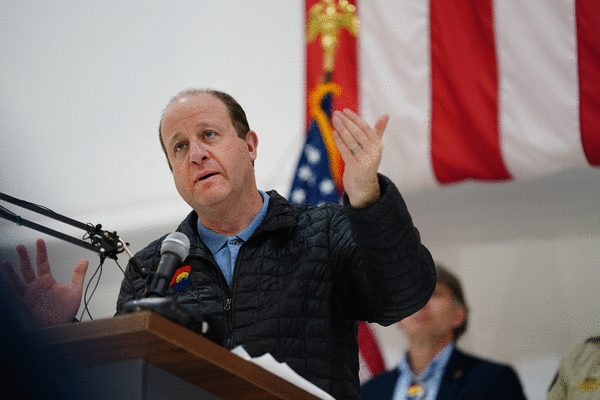
DENVER — For the second consecutive year, Colorado lawmakers are set to pass legislation that would ban companies from using price-setting algorithms.
And for the second consecutive year, Gov. Jared Polis has greeted the bill with a cold shoulder.
The state Senate passed House Bill 1210 on Wednesday on a 19-15 vote, putting the attempt to ban “surveillance pricing” on a glide path to Polis’ desk. If signed into law, the measure would generally prohibit companies from using the mountains of data collected on consumers to set individualized prices on items like groceries, plane tickets and electronics. It would also block companies like Uber or Lyft from using that data to set individualized wages for workers.
The measure is similar in intent to last year’s House Bill 1004, which targeted the algorithms that the Biden White House found had been used to increase rents in Denver and elsewhere in the United States. Polis vetoed that measure.
In the debate over this year’s measure, critics argue that companies use the technology to set prices at the highest point each consumer is willing to pay, based on the data collected about that person. That means the price you pay may depend on how close you are to a store or whether the algorithm has determined that you’re particularly desperate for diapers.
The bill’s opponents, which include a number of prominent business and technology groups, have countered that the technology is used to provide discount programs for customers and to increase pricing efficiencies.
“We appreciate the sponsors’ work to address our concerns; however, our members continue to tell us that the bill remains overly broad and creates uncertainty around routine business practices,” Brittany Morris Saunders, the president and CEO of the Colorado Technology Association, told lawmakers during an earlier committee hearing.
While other states have debated — and, in Maryland’s case, passed — limitations on price surveillance, Colorado’s bill would be the strongest in the country, said Lee Hepner, a senior legal counsel for the American Economic Liberties Project.
HB-1210 is “truly a first-in-the-nation bill to curb surveillance pricing,” Hepner said in an interview last month, after the bill had passed the House.
Whether it now becomes law is another question.
Polis’ office has declined to say whether the governor intends to sign the bill once it passes a final procedural vote and moves to his desk. On Wednesday, Polis spokesman Eric Maruyama referred The Denver Post to an earlier, lukewarm statement on the bill.
“Governor Polis is concerned with policies, including price-fixing and restrictions on demand-informed pricing, that further interfere with the free functioning of markets,” spokeswoman Ally Sullivan wrote last month.
Rep. Javier Mabrey, a Denver Democrat sponsoring the bill, said Wednesday that he hadn’t received direct feedback from the governor’s office and had heard about Polis’ position only through his statement to The Post.
“But I would expect, given the governor’s focus on affordability, that he does the right thing and signs the bill,” Mabrey said. “Coloradans don’t want to be spied on and scammed.”
HB-1210 is among the few remaining marquee affordability-focused bills backed by House Democrats this year; three of those bills were touted at a news conference earlier this year. Another bill in that package, which would’ve curbed prices at concert venues and sports stadiums, died in its first committee hearing, and a third affordability measure was never introduced.
Polis is often skeptical of bills that regulate tech companies or products, and that skepticism has butted up against Democratic lawmakers’ plans in the past. Last year, the governor rejected the legislation banning algorithms that had been used to hike rent prices in Denver and elsewhere, despite a letter from the House Democratic caucus urging him to sign it.
The 2026 sessions ends next Wednesday. Once HB-1210 reaches Polis’ desk, he will have 30 days to sign it, veto it or let it pass into law without his signature. If it becomes law, the bill would take effect in August.
_____
©2026 MediaNews Group, Inc. Visit at denverpost.com. Distributed by Tribune Content Agency, LLC.





Comments